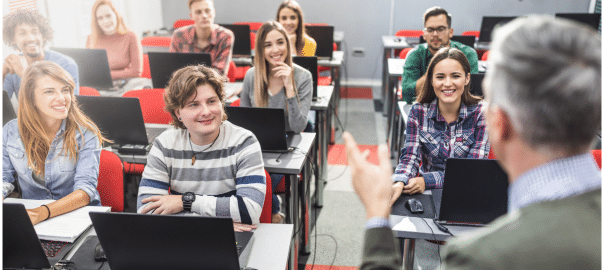
For many students business and marketing strategy can feel highly theoretical. Frameworks, models, and concepts discussed in lectures can feel disconnected with the real-world. Compare this to students placed in a competitive, decision-driven environment where every choice has real consequences; learning becomes far more engaging and memorable. This was one of the key themes explored in research from AUT examining how undergraduate students developed strategic thinking using the MikesBikes Business Simulation.
Developing Critical Thinking and Strategic Agility
In this study students operated companies in the MikesBikes simulation over the semester, applying marketing and business strategy concepts while competing against other teams. The dynamic nature of the simulation required students to continuously adapt their thinking as market conditions changed, and as competitors evolved their strategies.
One of the strongest themes from the research was the development of higher-level critical thinking skills. MikesBikes requires students to:
- Analyze changing market conditions
- Evaluate competitor behaviour
- Make strategic trade-offs
- Interpret financial and marketing reports
- Adapt strategies across multiple decision rounds
- Collaborate effectively within teams
As competitors were real student teams, rather than predictable computer-generated bots, this facilitated an environment which was far more dynamic and realistic. Students quickly learn that successful strategy is not about finding a single “correct” answer, but about continuously evaluating uncertainty and responding effectively.
The study also highlighted how students learned to refine their decision-making heuristics over time as they gained experience within the simulation environment.
Student Perspective
One of the most powerful indicators of impact comes directly from students themselves.
As one student reflected after participating in the MikesBikes experience:
“My mind is absolutely blown at the level of applicability of everything I have learnt… to the real world.”
The student explained that the combination of the simulation experience and reflective learning activities helped them better understand “the bigger picture” while strengthening their analytical thinking.
Creating More Engaged Learning Environments
Research and instructor feedback consistently show that simulations encourage:
- Higher student participation
- Greater teamwork and communication
- Improved strategic thinking
- Increased confidence in decision-making
- Stronger understanding of business concepts
This ability to connect theory with authentic business decision-making is one of the reasons many instructors integrate holistic simulations, like MikesBikes, over the length of their course rather than simplistic mini-sims.
Using a simulation over the length of a course enables students to become immersed in the experience, creating opportunities for critical thinking, reflection, and deep learning.
Business simulations also introduce something traditional teaching methods often struggle to replicate: emotional engagement. Introducing competition between student-run teams in a dynamic marketplace creates an environment where students become genuinely invested in outcomes. This heightened level of engagement encourages stronger collaboration, greater ownership of learning, and a deeper connection between theory and practice.
Bringing Business Education to Life with Smartsims
The most effective learning experiences are those that allow participants to actively test ideas, learn from mistakes, and reflect on outcomes. This is why experiential learning through simulation has become such a powerful teaching tool in business education.
As experiential learning continues to become a growing focus in higher education, simulations like MikesBikes are helping educators create more immersive and impactful classroom experiences.
Would you like to experience this for your course? Try MikesBikes for yourself by contacting us.