
For many introductory business courses, one of the biggest challenges is helping students move beyond memorizing concepts and begin thinking like real business professionals. At Drexel University experiential learning plays a central role in solving that challenge through the BUSN102 Foundations of Business course, where students take part in the MikesBikes Introduction to Business Simulation.
As the core experiential component of the course, MikesBikes places students into management teams responsible for running their own bicycle manufacturing company. Students must make cross-functional business decisions across marketing, operations, finance, and product development while competing against other student-run companies.
Rather than simply learning business terminology through lectures or textbook examples, students actively apply concepts in a dynamic environment where every decision has measurable consequences. Clinical Professor Jodi Cataline explains that the simulation allows students to connect classroom theory with practical business application in a much more meaningful way.
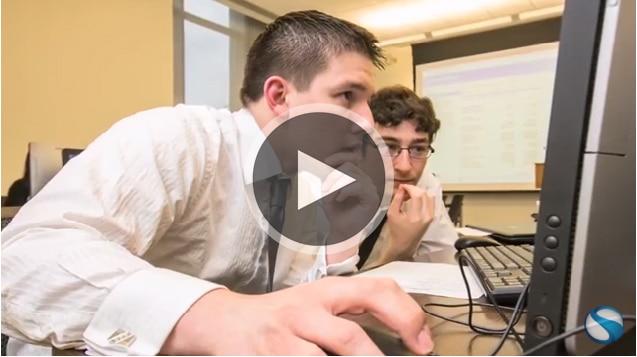
One of the key strengths of the experiential learning approach used in BUSN102 is that students are not learning business functions in isolation. Decisions made in one area of the company directly influence outcomes in another, helping students develop a more integrated understanding of how businesses operate in the real world. Students quickly discover how price affects demand, how operations decisions influence profitability, and how product positioning impacts market share and long-term performance.
The simulation also introduces an important emotional component that is often difficult to replicate in traditional classroom settings. As students compete against their peers and take ownership of their company performance, engagement levels naturally increase. Teams become invested in outcomes, encouraging deeper analysis, collaboration, and reflection throughout the learning process.
At Drexel the experiential learning experience extends beyond the simulation interface itself. Student teams participate in presentations and reflective analysis activities where they evaluate their company performance, explain their strategy, and communicate lessons learned from their managerial decisions. These activities reinforce communication, leadership, and critical thinking skills alongside foundational business knowledge.
For instructors teaching introductory business courses, Drexel University’s use of MikesBikes demonstrates how experiential learning can transform student engagement and improve the connection between theory and practice. Instead of passively learning about business, students experience the challenges, trade-offs, and consequences of running a company firsthand. This creates a learning environment that is active, collaborative, competitive, and highly memorable.
If you would like to try MikesBikes for yourself, contact Smartsims for free access or to schedule a live demonstration.