In today’s fast‑moving classroom, high school business courses need more than textbooks and lectures. They must deliver active, immersive experiences that prepare students for work, study and entrepreneurship. That’s where simulation‑based learning and educational simulations become transformational. One of the most compelling tools in this space is the business simulation game, and at the heart of this evolution is the real‑world success of MikesBikes Introduction.
Why Simulation‑based Learning Matters in High School Business Courses
Experiential Learning Over Passive Study
In traditional business management classes students often learn theories of strategy, marketing, accounting and operations. However, we know student learn and remember more when they become actively engaged in the content being taught.
Incorporating a business simulation game fosters deep understanding of concepts as students experience their own business experience. This allows them to take responsibility over their own learning and become personally engaged with the content.
A Real‑World Case Study
Cameron McDowell first encountered MikesBikes as a student. Now teaching a business and marketing course at Shorecrest High School (Washington, USA), Cameron uses MikesBikes as a dynamic and comprehensive capstone project that brings together all the concepts students have learned in class.
“Teaching this simulation is just as rewarding as I thought it would be,” he says. “It has made my classroom more dynamic and has completely transformed the way I teach.”
Through MikesBikes students experiment with real-world business decisions and think critically about competition, pricing strategies, and market positioning. “It allows students who want to dig deeper into business concepts”.
They must also collaborate, compare decisions, and even offer advice to their peers, creating an energetic classroom dynamic. Cameron recalls students who previously submitted low-quality work becoming more invested. One student who was disconnected from school surprised everyone by enthusiastically teaching others how to use the simulation.
To support high school learners, Cameron provides structured guidance and reflection prompts. “Reflecting on what worked and didn’t work is crucial for high school students,” he explains. He encourages students to take risks: “Try different strategies. Every approach can win if you pilot it correctly.”
Want to try MikesBikes for yourself?
MikesBikes Introduction is designed for students with no prior business knowledge or experience. This is achieved by enabling students to gradually take control over their own company. This approach makes MikesBikes one of the most widely used educational games for teaching business.
When Cameron McDowell first encountered the MikesBikes Introduction business simulation in his freshman year at Santa Clara University, he didn’t know it would play a pivotal role in shaping both his college experience and his future career. Fast forward several years, and that same simulation is now a cornerstone of his teaching approach as a public high school educator.
A Freshman’s Obsession
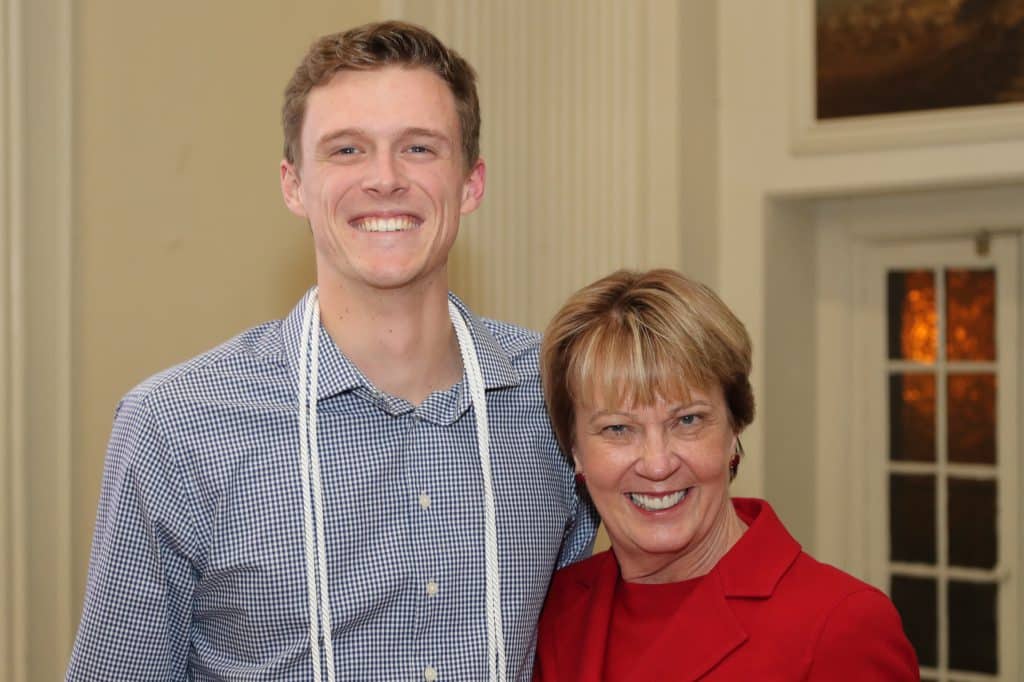
For many students, the first year of college can be a challenging transition. For Cameron (pictured on the left), it was no different. Struggling to adjust to life away from home, he found solace and focus in an unlikely place: the MikesBikes simulation. Required for his Intro to Business class, the simulation offered a chance to experiment with business decisions in a risk-free environment. What began as a requirement soon turned into an obsession.
“People started to know me as the ‘MikesBikes Guy,’” Cameron recalls. “Not sure that was the greatest way to start out college, but it really transformed my experience.”
MikesBikes became more than just an academic exercise, it connected him to professors and teaching assistants, and eventually, he took on the role of a teaching assistant himself, mentoring peers on the simulation’s intricacies.
Lessons Learned: Uncertainty and Strategy
Cameron in his senior year and working as a teaching assistant
While his first experience with MikesBikes was filled with uncertainty, it was also a profound learning experience. Cameron quickly realized that, despite his efforts, he couldn’t control the actions of his classmates. That uncertainty, he says, mirrors the real world of business, where external factors can always affect outcomes.
“As I continued to help others, I began to realize that understanding the simulation deeply, even in the face of external challenges, was enough to consistently place my teams in the top three,” he shares.
The experience of being able to manipulate business decisions with precision changing marketing budgets, adjusting pricing strategies, and evaluating financial impacts fueled his growing interest in economic analysis. But it wasn’t until he was teaching the simulation that his career path took a sharp turn.
From Business School to the Classroom
Initially pursuing a career in economic analysis, Cameron soon discovered that he was more passionate about teaching than the corporate world. His experience leading MikesBikes sessions for over 70 peers in college gave him a taste for instructing, and he realized that he had a knack for explaining complex concepts in an engaging way.
“I realized that even though I was studying business, what I was good at was teaching,” he explains. “I decided to switch gears and pursue a career in education, eventually becoming a public high school teacher.”
Incorporating MikesBikes in the Classroom
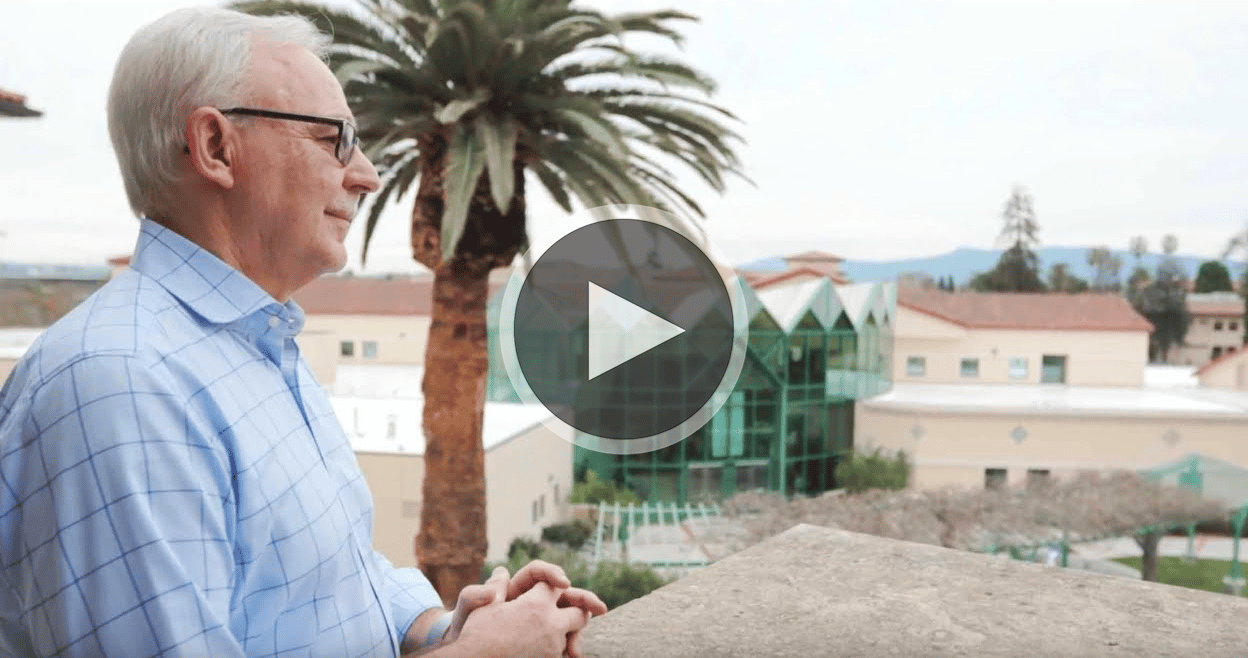
From student to teacher — Cameron now as a high school instructor.
Now teaching marketing to high school students, Cameron has brought MikesBikes with him. For his second-year marketing students, the simulation serves as a dynamic and comprehensive capstone project that brings together all the concepts they’ve learned in his class. Unlike other capstone projects, MikesBikes challenges students to experiment with real-world business decisions and think critically about competition, pricing strategies, and market positioning.
“The simulation adds elements that my students haven’t been exposed to before,” says Cameron. “It allows students who want to dig deeper into business concepts to do so, while others can focus on the core ideas.”
Though competition can sometimes be rare in the classroom, he believes that a healthy, competitive element is essential for students to demonstrate their understanding in a fun, engaging way. The impact is visible, as students collaborate, tease one another about decisions, and even offer advice to their peers.
Changing the Learning Experience
For some students, MikesBikes has been a game-changer. Cameron recalls two students who had previously submitted low-quality work, often relying on AI or copying from others. However, through the simulation, they found a new connection to the material.
“I saw one boy, who was disconnected from school, teaching a group of kids he had never spoken to about how to use the solo player mode. It was incredible,” says Cameron.
The simulation’s hands-on approach has also prompted him to make adjustments in how he presents the material. While college students received minimal scaffolding in his own experience, he now provides high school students with detailed guidance on how to make decisions and reflect on the results. This approach encourages deeper learning and self-reflection.
“I think that reflecting on what worked and didn’t work is crucial for high school students,” he says. “I want them to experiment, but I also want them to understand the ‘why’ behind their decisions.”
Advice for Students
For students currently navigating the MikesBikes simulation, Cameron offers a piece of valuable advice: “Understand the impact of every decision. How does a small increase in marketing affect your brand awareness? How does a price change impact sales? The more intimately you know how each lever works, the better you’ll be able to adapt to the simulation’s challenges.”
But he also encourages students to take risks: “Try different strategies. Every approach can win if you pilot it correctly.”
Preparing for the Real World
Cameron believes that business simulations like MikesBikes offer more than just a classroom experience. They prepare students for the real-world challenges of business by fostering critical thinking, teamwork, and strategic decision-making.
“In the groups, students often disagree on the best direction for the business. Neither side is wrong, but finding common ground is key. This mirrors real business decisions, where collaboration and compromise are essential.”
A Career Transformed
Looking back, Cameron reflects on how MikesBikes has been a defining part of his journey—not only as a student but also as an educator. “Teaching this simulation is just as rewarding as I thought it would be,” he says. “It has made my classroom more dynamic and energetic, and it has completely transformed the way I approach teaching.”
MikesBikes didn’t just teach him about business; it helped him discover his true calling as an educator, shaping his career path in ways he never imagined. Today, it continues to play a central role in how he teaches and inspires his students to think critically, collaborate effectively, and embrace the complexities of real-world business.
Credit: Santa Clara University, Leavey School of Business
Santa Clara University use the MikesBikes Introduction to Business Simulation to teach their freshmen course, Contemporary Business Issues. The BUSN 70 is a class designed to help students find their vocations in the world of business.
Part of the BUSN 70 curriculum is a business simulation called MikesBikes. Professor Tim Harris describes the project as “a comprehensive business simulation that is interesting, complex and challenging. It is a great way to experience many of the aspects of running a business and making critical strategic and tactical business decisions (such as price, product, marketing, capacity, etc), without the potential real life downside. It is a favorite experience for many of the students.”
BUSN 70 is an introductory business course with the emphasis on the objectives of the contemporary business firm and its relationship to the modern business environment.
“BUSN 70 really opened my eyes to the endless possibilities of a business degree from the Leavey School of Business,” said Nicole Kim, a Peer Educator for the course. “You’ll learn the foundations of anything and everything in business from preparing financial statements to fostering a company culture. The best part about BUSN 70 is that each professor has extensive, unique experiences from the business world that they actively incorporate into the classroom in engaging, hands-on, and discussion-based activities.”
Nicole Kim also reflects on her Mike’s Bikes experience saying, “Mike’s Bikes is all about utilizing your accumulated knowledge from the quarter in lifelike decision-making for a firm. Don’t be afraid to make mistakes – this simulation is all about learning through trial and error and having fun with it!”
Through 20+ years developing and running business simulations we have the experience to ensure that student cheating won’t be an issue with our products.
Through the use of a sophisticated model, dynamic simulation scenarios, and real student competitors (not solely computer robots), to be successful the decisions adopted by each student/team must be specific to their industry and their competitor’s decisions. Simply copy the decisions from a previous semester’s course and they will fail to adapt to the market or react to threats from their fellow student competitors.
As a result, every iteration of the simulation is unique. We love hearing from our customers how using our simulations makes teaching a new and exciting experience each semester.
In addition, we offer the following:
Regular scenario and decision updates meaning they must rely on the market and company reports to formulate their decisions.
Student activity tracking so you and/or us can identify what students have actually being doing while logged in.
The option to switch scenarios between semesters or years (MikesBikes only) so students start in different markets with different parameters.
Feel free to contact us if you have any questions.
Teaching online requires a change in teaching approach to effectively deliver learning outcomes and engage students. Business simulation games are the perfect teaching tool for the online learning environment. They provide students with an immediate application to theory, in a fun and engaging way. Students build confidence in business concepts and terms, and they create connection with the course, each other and their instructor.
Here are our seven best practices for using a business simulation in an online course:
“Post weekly words of encouragement to students throughout the simulation as it is keeps the work top of mind and keeps them focused on the work.” – Des Moines Area Community College
You can regularly engage students through videos, initiating and participation in discussion boards through your learning management system (LMS). Also, make sure students are aware of how they can reach out to you when they need help.
2. Real-World Application
Business simulations give students real-world practice experience. So highlight these throughout the simulation.
“I love using a business simulation. Cases are usually obsolete, have students analyzing other people’s decisions, and don’t provide an opportunity for students to practice implementation, assessment, and adjustment of their strategic decisions. However, with a simulation, students are able to make decisions for their own firms, see the results of those decisions, and adjust accordingly, all within a dynamic (and fun) environment.” – Scott Livengood (Arizona State University)
3. Clear Expectations
Provide students with a clear
set of your expectations at the beginning of the course. This should
include a detailed syllabus, outlining their assessments and deadlines.
“I
have created a Beginner’s
Guide where I essentially walk students through the first two
years of decisions, using screen shots and references from the simulation
itself. I have also created a video with my voiceover using the simulation
while following the Beginner’s
Guide. I also give some background regarding the purpose and
learning objectives of the simulation.” –Scott Livengood (Arizona State
University)
4. Make Use of Individual and Group Projects
A healthy mix of group and individual projects is an ideal way of ensuring success
with online learning. Providing students with a variety of learning styles
will improve their learning abilities and educate them on the importance of
both teamwork and individual achievements.
Lisa Parrott from University of Saint Mary facilitates individual and group
assessments in her online Strategic Management course. She shares these in the
article, Teaching
Strategic Management Online at USM.
5. Learning Objectives
Alignment is important. Ensure that your course content aligns with objectives and assessments.
Lisa Parrott from University of Saint Mary shares her syllabus to demonstrate how she aligns the simulation and assessments to the course’s learning objectives.
6. Provide Students with Prompt Feedback
Provide timely feedback students can apply during the course and to reinforce essential concepts, materials and skills.
Darl
Kolb from the University of Auckland provides a “Stock Report” after every
rollover to all his students during the Multi-Player phase. Through this
report, he shares a summary of the teams’ performance and some advice to help
them in the next rollover.
“The simulation brought some real life into the course and made it
better (shocking but true). MikesBikes brought to life a variety of concepts
that are discussed in the text and allowed students to work together making
decisions for the upcoming year.Both my online as well as my face-to-face classroom
students do the simulation and I could not be more pleased. Sure, some students
get so frustrated they want to quit – but I tell them the key is to push forward,
stay with it, preserve and never give up. When they see the light it is an
amazing sight for me and a feeling of true success for them.” – Russell Holmes from Des Moines
Area Community College
Learn from other instructors:
The instructors below have been gracious enough to share their experience teaching online with a Smartsims Business Simulation:
With many courses transitioning online we thought it timely to interview Scott Livengood from University of Colorado Boulder. Scott has a great deal of experience using our MikesBikes Advanced Business Simulation in his capstone Strategic Management course which he teaches in both face-to-face and online formats.
How do you use MikesBikes in your course?
I use MikesBikes Advanced primarily for my capstone Strategic Management undergraduate course.
I have three “rounds” of play:
The first is the Practice Round, where students compete directly against a computer rival in two possible customer segments (Adventurer and Leisure). This round is not graded but gives the students some exposure to the simulation so they can learn about its mechanics and also so they can experiment with and fine tune their strategies.
Next comes the Solo Round, where the environment is exactly the same as the Practice Round (i.e. only one computer rival and two segments), except the rollovers occur on my schedule rather than giving the students the ability to roll forward, roll backward, or to reset the simulation. This occurs for five to six rollovers, depending on the length of the course.
Last comes the Competitive Round, where students are assigned to “worlds” of approximately eight firms and they compete head to head with other students in the course, also over five or six rollovers. The Competitive Round also introduces three other customer segments (Racer, Commuter, Kids) and a new distribution outlet.
How do you introduce MikesBikes to students?
I have created a Beginner’s Guide where I essentially walk students through the first two years of decisions, using screen shots and references from the simulation itself. I have also created a video with my voiceover using the simulation while following the Beginner’s Guide. I also give some background regarding the purpose and learning objectives of the simulation.
Do students use MikesBikes in teams or individually? If in teams, how do you facilitate teamwork in an online environment?
I’ve experimented with using groups of students, but have found that to be ineffective, mainly due to two reasons: coordination and effort (often students don’t respond to communication and one or two students end up doing all the work and making all the decisions) and learning (students usually use the “divide and conquer” method where one student is in charge of marketing, a different one in charge of new product development, etc. whereas the way I do it, every student has to learn about all the various parts of the organization and how they fit together, which I think enhances the benefit gained). Thankfully, MikesBikes Advanced is complex enough that students have to dive in and learn new things, but not so complex that an individual student can’t make all the decisions.
What simulation related assessments and/or activities do you use?
Students are required to write a paper on External Analysis (Porter’s Five Forces), another paper on Internal Analysis (Resource-based View of the Firm), and another paper on SWOT Analysis and Business-level Strategies during the Practice Round to create a Strategic Plan for their Solo Round.
After the Competitive Round, they write a longer Simulation Reflection Paper on lessons learned from the Solo Round, a Competitive Analysis based on their biggest rivals, challenges with Diversification, exploration of a Merger or Acquisition (why or why not to pursue), and their biggest takeaway from the simulation.
These assessments align with the course material on Business-level Strategies and Corporate-level strategies and count for approximately 35% of their overall grade for the course.
In addition, a small percentage of their grade (5% for Solo and 5% for Competitive, which is mandated by our course coordinator – I would prefer 10% for the Competitive Round) is based on their actual performance on the simulation itself, using final SHV as the measure.
I break the students into “quartiles” based on their final SHV and assign a grade accordingly (top 25% receive 50 points, next 25% receive 40 points, next 25% receive 30 points, and the bottom 25% receive 20 points). This helps to reward students who perform well but isn’t overly strict for those who struggle with the simulation.
I impose a 20% SHV penalty for students who are insolvent during the simulation after providing a cash infusion to help them continue to be able to participate.
What other applications do you use?
We use Canvas as our Learning Management System and I use that as an interface with students. I do use VoiceThread for students to give presentation, but that’s not directly related to the simulation itself.
Do you have any tips for using a business simulation in an online course?
I love using a business simulation, particularly over the typical case study method. Cases are usually obsolete, have students analyzing other people’s decisions, and don’t provide an opportunity for students to practice implementation, assessment, and adjustment of their strategic decisions. However, with a simulation, students are able to make decisions for their own firms, see the results of those decisions, and adjust accordingly, all within a dynamic (and fun) environment. It’s taken me a few years to tinker with different ways to use the simulation, but I like what I’m currently doing and feel the students gain a great experience.
The MikesBikes simulation has been extremely well received by students. Many enjoy the opportunity to work in groups and learn from others, while nearly all love the ability to apply what they are learning in a safe environment.
Lisa has kindly shared how MikesBikes is used at USM and provided tips to others implementing a business simulation in an online course.
Introducing the Simulation & Single-Player Phase
Week 1
Students are introduced to the Single-Player (practice phase) in the first week. They are also required to read the player’s manual and watch the tutorial videos.
To ensure they have completed these tasks they take a 20-question introductory quiz where they must achieve at least 80% to pass. They are given three opportunities to obtain a passing grade, otherwise they must work with the instructor to determine if they can continue in the course. It is critical students understand how to participate in the simulation before they are put into a team environment.
Students are also asked a brief strategy questionnaire to help the instructor formulate groups.
Finally, students are asked to translate their learning into an individual analysis that looks at the lessons learned, elements of the simulation that are still unclear, and reports used to evaluate performance.
Multi-Player Phase and Assessments
Week 2
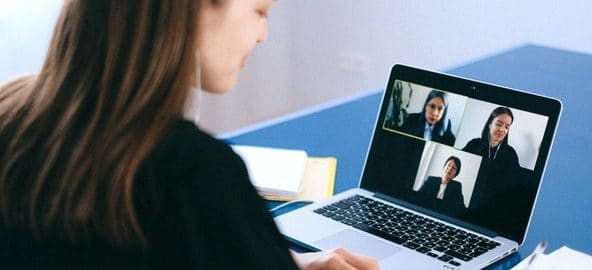
The second week moves students from the individual experience into teams. Teams are free to use any means to work virtually; Google Hangouts, Zoom, Facetime, etc.
Students first complete a team contract to establish methods of communication, meeting frequency, workload, steps for resolving conflict, and deadlines.
Before starting Multi-Player phase they create a strategic plan. This includes building a mission statement, vision, values, performance objectives, and a plan for weekly evaluation of results and decisions.
Week 3 to Week 6
Rollovers (decision deadlines) begin in week three, with two rollovers per week until week six.
Each week students conduct an individual analysis examining the decisions made by their team, explaining their performance using data from reports within the simulation and to apply the weekly learning objectives to their team performance. This presents a knowledge check at an individual level each week.
After Rollover 4 a consultation meeting is held between each team and their instructor. This provides teams the opportunity to discuss their strategic implementation and evaluate progress to determine if change is needed. Teams can also use this time to ask questions.
Week 7
Teams prepare a video presentation covering elements from their strategic plan, a SWOT analysis, best practices, analysis of overall performance, and recommendations for future directions of the company.
Week 8
The video presentation from week 7 provide the opportunity for students to see “behind the curtain” of the other companies. In response, they are required to evaluate the strategy of their competitors.
Students also complete an individual evaluation of the performance of each of their team members and how they will use skills learned in their next group experience.
The final assignment for the course asks students to write an individual analysis of the entire experience. They are asked to evaluate team performance, consider whether they would expand globally (and where) and reflect on the entire experience. The paper also addresses the ethical performance of their team, effectiveness of their strategy, and highlights three lessons learned. Students are asked to incorporate scholarly articles into this assignment to support their assessment.
Tips for using a business simulation in an online course:
The first few weeks are often more time consuming than normal, and it may require multiple reminders to read the manual and watch the videos!
When introducing the simulation, it is best to focus on one area of development at a time, and build on concepts each week. Students get overwhelmed in the first few weeks using a simulation, especially if this is their first experience. As they become more familiar with how their decisions impact multiple elements of the business they will begin developing more complicated analysis of their performance.
Team design is extremely valuable for a successful Multi-Player experience. Too many risk adverse students will create problems with overall performance and this should be avoided.
The ideal team size is three. Two will often result in group-think and passive agreement, four often yields social loafing by at least one member who may not feel they have a voice. With three there is a tie breaker for any decisions when the team is split on how to move forward.
The more students know how to read the reports available to evaluate the effectiveness of their decisions, the better their team will perform and often understand how different areas are connected.
Each team will develop at a different pace, be sure to push them forward based on their unique needs. Some may reach a higher level of understanding faster than others.
How do you use the MikesBikes Simulation in BUS102?
MikesBikes is used as a supplement to the material that we cover in class. The students are given approximately 45 minutes in class during the week (in face-to-face classes) to meet with their team and review their possible decisions. In an online class, the students compete individually.
How do you introduce MikesBikes to students?
MikesBikes is introduced to students in multiple announcements during the first week of the online class. These announcements direct students to folders in the online class containing Smartsims’ introductory videos and tutorials. In addition, after watching the videos, students must complete a quiz showing that they have a basic understanding of the simulation.
Do students use MikesBikes in teams or individually? If in teams, how do you facilitate teamwork in an online environment?
With the online course offering, students compete individually. If I were to offer the simulation in teams, as opposed to individually, I would encourage students to use free online meeting software such as Zoom Meetings or Microsoft Teams, and to meet at least once a week online.
Do you implement any simulation related assessments?
Primarily, the students are graded on their final shareholder value. There aren’t really many graded assessments in my online class. I have colleagues who have students present a final MikesBikes presentation at the end of the simulation.
What other applications do you use to help deliver your online course?
What advice can you offer to others using a business simulation in their online courses?
It is critical to get students to practice with the Single-Player simulation prior to moving to the Multi-Player phase. Checking student login and online activity is important to ensure that there is a basic understanding of the simulation at the end of the Single-Player phase.
One piece of advice I would give would be to post weekly words of encouragement to students throughout the simulation as it keeps the work top of mind and keeps them focused on the work.
As the new US academic year begins the coronavirus (COVID‐19) pandemic has forced business schools across the country to transition all their courses to online learning only. However, universities in China were the first to face this challenge with government mandated closures of schools early in 2020. This new paper in Wiley’s Human Behavior and Emerging Technologies Journal by Wei Bao, Associate Professor at the Graduate School of Education at Peking University, offers sound advice to colleagues beyond China on how to deliver effective teaching in the online environment.
Human Behavior and Emerging Technologies Journal by Wei Bao, Associate Professor at the Graduate School of Education at Peking University
The paper classifies six instructional strategies to improve students’ learning concentration and engagement:
1. Make emergency plans for unexpected problems; 2. Divide the teaching content into smaller units to help students focus; 3. Emphasize the use of “voice” in teaching; 4. Work with teaching assistants and gain online support from them; 5. Strengthen students’ active learning ability outside of class; and 6. Combine online learning and offline self‐learning effectively.
All of Smartsims Business Simulations are available through Wiley as a bundle with their physical and digital books.
MikesBikes Introduction to Business features a unique experience that builds confidence by gradually introducing business terms, concepts and decision-making. This introduction to business gives students a taste of making sales, marketing, and operations decisions in a safe and fun learning environment.
MikesBikes Advanced is a strategic management simulation. Students conduct market research, formulate strategy and make critical company decisions in this challenging addition to any business course. Commonly used in management, strategy and capstone courses.
The Music2Go Marketing Simulation provides an opportunity for students to develop and implement their own Strategic Marketing Plan in a reflective learning environment. This Marketing Simulation gradually introduces core marketing concepts and sales & marketing management.
AdSim Advertising Simulation illustrates the core advertising terms and principles. Students have an opportunity to develop their own Strategic Advertising Plan, with a realistic scenario including a fixed budget. This simulation is particularly useful for sales promotion management, advertising management and integrated marking communications (IMC) courses.
Free Demonstration
A free demonstration is available to all faculty members. Contact us to arrange your access.
The coronavirus (COVID‐19) pandemic has forced instructors to quickly transition their traditional face‐to‐face courses to an online format. In the USA alone, 43 states have either mandated or strongly recommended school closures through to at least the 2020 fall semester. These unprecedented measures creates unique challenges to faculty in delivering their course content, especially given over 70% of America’s 1.5 million college faculty are new to online teaching.
Smartsims’ own Camille Canuto features in a recent blog post by Worthington Direct on “How Teachers are Adapting to the COVID-19 Classroom.”
For other instructors looking for activities to actively engage their students in a distance learning environment, then we would strongly recommend using a business simulation. The setup process is very easy, and students would only need internet connection to use the simulation. It can be accessed in any device and the range of resources available in the website would help guide students on what they need to do. This allows students to be in charge of their own learning and the best way to learn independently.