Anyone who’s tried to find a job lately knows how tough the market is. Employers only want to recruit people who tick all the boxes, including prior industry experience. This poses a significant problem for graduates.
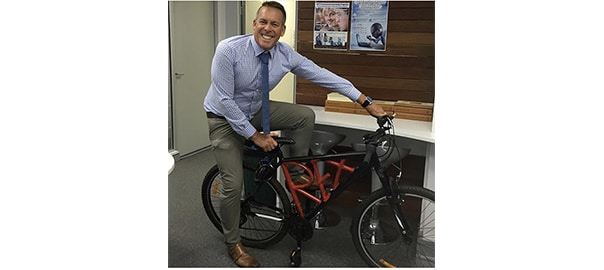
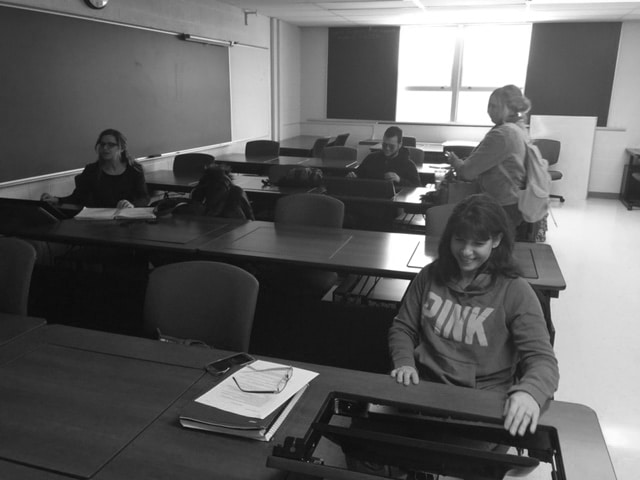
King’s Own Institute (also known as Australian Institute of Business Management) instructor, Rex Walsh (pictured above) was over the moon when he found out that one of the teams in his class achieved the top spot in the MikesBikes Introduction Hall of Fame. A big congratulations toDashcycle and Rex for this amazing achievement!
We interviewed Rex to learn more about his course and how he prepares students to succeed in the simulation.
Tell us about your experience with MikesBikes Introduction.
Wonderful. Players universally rate this unit as the most relevant, rewarding and personal development based course they complete and this is incredibly rewarding for me.
Players have even made their own customized bike and accessories! It’s mind-blowing!
How does MikesBikes allow you to engage with your students?
MikesBikes allows me to engage with my students in the most rewarding way. The players develop competence, skills, confidence and learn to relate to me simply as a mentor. They grow up quickly in my course!
How is your course designed?
We operate the course as a practical real life program. The simulation is the vehicle for which students must then adjust to be business ready in a real world sense.
How is your course assessed?
Assessment is based initially on the position achieved in simulation. Based on this grading, students must then present various supporting assessment materials. This includes reflection journals, business reports, business presentations, including a startup for venture capital and at completion a business ready presentation to launch in the real world.
How do you prepare students for the MikesBikes simulation?
In the first few weeks, they go through the Single-Player practice version of the simulation. The students must survive on their own with my role purely as a mentor. They are challenged to experiment and explore various decisions, and strategies.
Tell us about unique activities used to complement the simulation.
Players are asked to develop webpages, social media pages such as Facebook, Instagram, etc. Students also use video editing software to make presentations and advertisements.
What do students take away from the simulation? For example, did the simulation improve their academic performance and/or assisted in securing a job?
Students are able to launch their own businesses after and during completion of the simulation. My approach is very much based on simulating real world application.
Why do you like MikesBikes?
The support offered by Smartsims is terrific and the lasting relationship is very rewarding!!
Comment on your experience with the staff.
The staff are terrific and very responsive, not just to me, but also to the students. I cannot recommend Smartsims staff more highly!
“It’s not the will to win , but the will to prepare to win that makes the difference.”
Paul Bryant
Students across the world were invited to join the SuperFan Quiz competition to answer questions about MikesBikes Advanced and MikesBikes Introduction with the fastest time and with the most correct answers. Out of over 200 participants, we now have two that reigned supreme in the competition and will be awarded the MikesBikes SuperFan title.
Firstly, we would like thank everyone that entered our MikesBikes SuperFan Quiz and made this competition a success. It is so exciting to see that there are plenty of true-blue MikesBikes SuperFan!
The long wait is finally over.
We are proud to announce that our 2017 MikesBikes SuperFan Quiz winners are, Xiaoying Ping from the University of Auckland and Jennifer DeWitt from Tarrant County College District. These two students certainly had the will to prepare to win and finish the quizzes with the fastest time, and with all correct answers! A big congratulations from all of us here at Smartsims!
Xiaoying and Jennifer were generous enough to share some advice to future students and things they have learnt from the simulation. Here’s what they have to say:
Xiaoying Ping from the University of Auckland
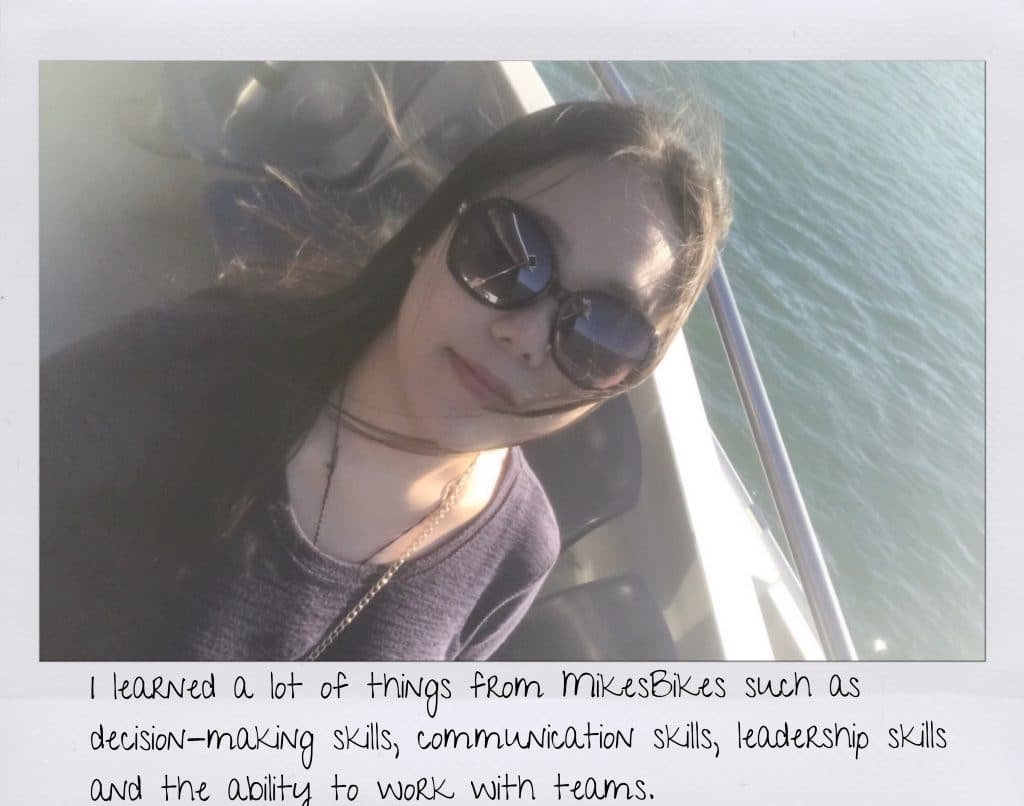
Hi guys. I am Xiaoying Ping, an international student at the University of Auckland. It is really an honor for me to win the MikesBikes Superfan Quiz Competition! For me, the MikesBikes simulation is not only a kind of software but also a valuable practice business tool. I learned a lot of things, such as decision-making skills, communication skills, leadership skills, and teamwork skills from the MikesBikes simulation. It was really a valuable and memorable experience for me. Hope all your guys could acquire more useful business knowledge through the MikesBikes simulation. Good luck and enjoy your business journey in the MikesBikes simulation!
Jennifer DeWitt from Tarrant County College District
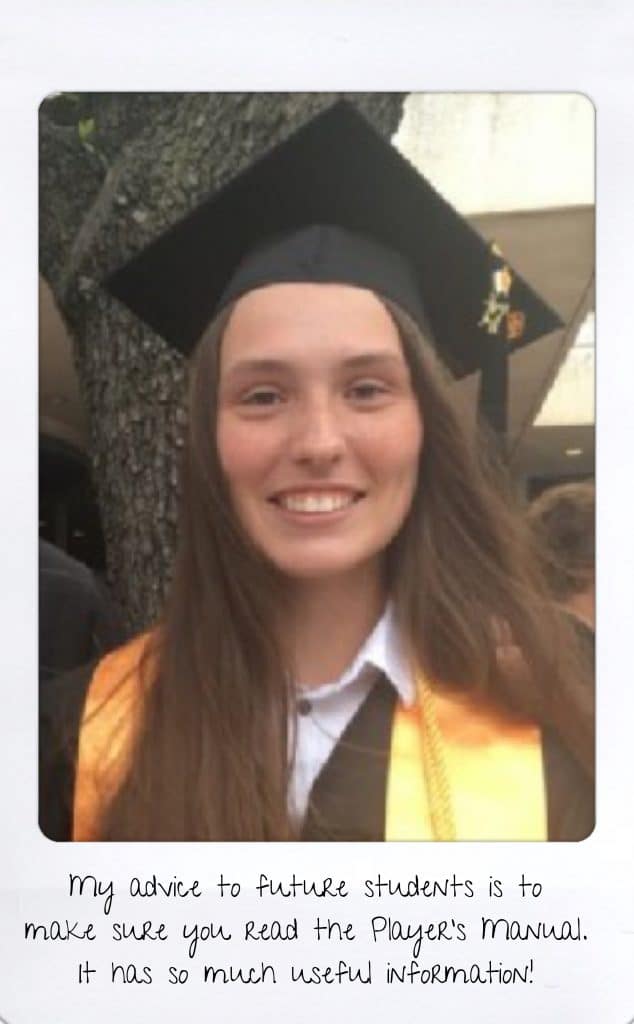
My advice to future students is to make sure you set aside ample time to make your decisions with your teammates, because a twenty minute phone call isn’t going to cut it. Something I wish I would have done differently is read the MikesBikes Intro Players Manual. I didn’t realize until the very end of the simulation how much useful information is in that link!
Make sure you are following us on Facebook and Twitter, so you’re updated with our latest news and events!
The article below is written by Daniel McCarty, an instructor currently using MikesBikes Introduction within his course at St. Clair Community College.
Background
Here in the U.S., community colleges offer the first two years of a traditional four-year degree. They are fairly local in their appeal, and offer significant convenience and cost savings vs. proceeding directly to four year colleges. The degree we offer is a two-year Associates of Science or Liberal Arts (AAS) degree. Or students may simply choose to transfer without completing the AAS degree.
Challenges
U.S. community colleges are OPEN ADMISSION, which means that we accept all students, regardless of GPA, test scores or aptitude. Our students range from the brilliant candidate for admission to University of Michigan in year three, to the high school drop-out or students with significant learning and behavioral challenges. Math and writing are often particularly difficult challenges with the latter students. We offer remedial, non-college credit courses for students not yet performing at the freshman level, but there are still “gaps” in their learning.
The Capstone Course
The open admission policy does not mean we lower our standards at community colleges. We expect them to be performing at the college sophomore level by the time they leave our campus. To confirm that, we have a variety of testing protocols. In business, which I teach, we offer what is called a Capstone course, entitled Critical Thinking in Business. It is taken in the final term of their two-year degree and has several prerequisites: marketing, management and accounting. The capstone course is designed to demonstrate competency in critical thinking, using all the classes they have taken during their two year stay at the college. The course is built around two main components – the case study and business simulations. For case studies, we use Harvard School of Business short cases, the exact same cases used for their program. For the business simulation, I use Smarstims’ MikesBikes Introduction.
Why I use MikesBikes Introduction
I should say that I am not a career-long academic. I am a former President/CEO of several multi-billion dollar companies, including some Fortune 500 firms at the President level. I retired after thirty years in the corporate world and chose teaching in my small, struggling hometown so I could pass along some of the things I have learned in the business world.
I believe MikesBikes Introduction is the most realistic business simulation I have ever encountered. I use it because it reminds me of my business career and the things I did every day on the job. I consider it an excellent preparation for either a career or further academic studies.
How I use MikesBikes Introduction
I find that I need to make some modifications to the Smartsims methodology to accommodate my students. While they have all had accounting, management and marketing, their retention is often not what it should be. I find myself having to revisit the basics of the financial statements. My focus is not on how they prepared, but rather how to read the reports and see the “story” behind the numbers.
Dan McCarty’s students
Here are the “tricks” I use to make MikesBikes Introduction friendlier to average community college students:
1. I run the class as an eight-week simulation
There are two reasons I cut it down to eight weeks:
Their learning starts to drop off at that point and we get into repetitive situations. Community college students’ strategic moves are often focused on more basic business concepts; you won’t find the advanced tactics you might see in a four-year environment.
Because of the differences in abilities among students, the simulation becomes a bit of a “blow out” and it is often a kindness for some teams to end it after eight weeks. I try to minimize this by mixing excellent students with challenged students, but it happens anyway.
I find that students are taught how to prepare financial statements in accounting classes, the focus is not how to interpret them, with the intention of deciding their next tactical move in the marketplace. MikesBikes adds this element to their education, but I find I must prepare them for it. We go over financial statements on sites like Yahoo Finance and we discuss whether the numbers point to a positive or negative outlook for the future. Often, we do not have the time or detailed financial data to determine the root causes of every number we see, but we can certainly make a list of things we would want to question about the data.
2. I show the class the teacher’s version of the data summaries.
My students are not advanced enough to benefit from the confidentiality of data. They need to learn from other student’s mistakes. They need to understand which firms are cash strapped and the moves they might make to recover from their cash position. They can also understand why their strategies did not work. For example, if they implemented a price decline along with a modest quality decline, they will find that this would not translate to an increase in sales (most especially if a segment is sensitive to quality). It helps to see that another team took the same price decline, but chose to maintain their quality. That helps them understand their strategies are only as good as their assumptions about what their competition will do. I also give general advice in the form of basic business “lessons learned”. I find that giving up the confidentiality is well worth the learning we get from everybody’s good and bad moves. They really do not have the sophistication level to take advantage of the data like they might at an Ivy League school.
3. Finally, my lectures are totally built around the data for the week.
I never know what my lecture is going to be until turnover day. Then I must quickly write a lecture on the topics that are reflected in the results. For example, the importance of accurate forecasting might be a subject driven by the results. Another example might be the importance of trying to maintain margins while investing in the business. Another topic I find that students rarely take full advantage of are the financial moves – buying back stock, paying dividends—because of a lack of comfort in that area. They also make the common mistake on sitting on way too much cash when there are business investments to be made. Everybody makes good moves and bad, and I use ALL their moves as a teachable moment for the rest of the class.
Conclusion
My students will never make the MikesBikes Introduction Hall of Fame, but that is not the point. They learn how to read financial reports, how to use those financial reports to develop a “picture” of what is happening in the marketplace, they learn to make business decisions that are data-driven and they learn how to recover from the inevitable bad decision or unexpected competitive activity they will surely encounter during the game.
It is a wonderful learning experience. I strongly endorse it for students of all ability levels. The simulation can be adjusted to the skill set of the class. And EVERYONE enjoys the competitive nature of the assignment and enjoys bragging rights when they are on top of the heap for the week.
Dan McCarty has worked his way up from entry level marketing assistant to President and CEO of multi-billion dollar companies and divisions of companies. Dan has managed America’s best known brands including Del Monte, Quilted Northern, Underwood, Crystal, Dixie Cups and Plates, Brawny Paper Towels, Accent, Hain Health Foods and more. Dan is also a MBA graduate from the prestigious Haas School of Business at the University of California in Berkeley. (Source: UDemy)
Is your MikesBikes Company struggling to make sales or losing cash? If your firm’s financial position has stagnated or is deteriorating, don’t lose hope. This is a great opportunity for you to review your strategy and make changes, and in the process, learn valuable life-long lessons about business decision-making.
Here are five ways to help you improve your performance in MikesBikes:
1. Conduct a Situation Analysis
Performance in MikesBikes, and indeed the real-world, is determined by three things:
Your decisions;
Your competitor’s decisions; and
The market you are operating in.
If your Shareholder Value has been dropping, you must first identify why this is happening. To do this, ask yourself the following questions:
Are my decisions appropriate for the market and consumer preferences?
Has the market conditions or consumer preferences changed?
How have competitor decisions affected my performance?
The following reports in MikesBikes will help you to answer these questions:
Maximizing return on expenditure is the key to success in MikesBikes, represented by your company’s profit. Each functional decision area contributes to your company’s profit:
Marketing: Are you overspending on Product Advertising, Product PR or Branding? As a rule, your marketing expenditure should not exceed 30% of your Wholesale (NOT retail) Sales Revenue.
Distribution: Are your Retail Margins higher than the industry average?
Production: Is your Factory Idle Time too high (more than 10%)? Or do you have Lost Sales?
Product Development: Have you conducted product development to reduce the Prime Cost of your products? Have you taken advantage of empty or low competition market segments?
You can also contact us with any specific questions.
4. Seek a Cash Injection
An unfortunate reality of business is that companies fail from time to time. However, even if your company does become insolvent (signified by a Share Price of less than $1) it is not the end of your journey as a MikesBikes business manager. An interest-free cash injection, combined with coaching from the Smartsims Support Team, will give you another change at success to assist your firm’s recovery. Talk to your instructor if you believe you qualify.
5. Set New Goals
Setting new goals for your company can be important for your team’s focus and motivation. These goals should be small and achievable.
High Schools, Community Colleges and Universities in Pennsylvania are being pressured to prove that their school curriculum is improving overall student knowledge, retention rate and employability.
Studies show that business simulations provide students with experiential, reflective, action-oriented and discursive learning (Hoover et al., 2001), and Drexel University is a fantastic example of a school that has seen outstanding results after integrating a Smartsims business simulation game into their curriculum.
Before everything else, getting ready is the secret of success.
Henry Ford
This week, we’re featuring one of the latest Hall of Fame entrants, Logun Williamson from the University of Utah. He landed 10th place in the Music2Go Multi-Player (All Time) Hall of Fame.
Are you thinking about incorporating business simulation games into your courses or training programs?
Studies have proven that business simulations have the potential to improve student engagement, learning and employability. However, whether you are a new or experienced simulation user, it is extremely important to look for the best strategies to ensure smooth integration of the simulation into a course and maximize teaching and learning benefits. Continue reading 5 Effective Teaching Strategies for Business Simulation Games→