Category Archives: News

Santa Clara University student

Success Lies in Knowing Your Weaknesses and Playing to Your Strengths

Bonilla Ice, a company ran by Brian Bonilla from Santa Clara University landed sixth place in the 2016 MikesBikes World Champs

The Smartsims team reached out and interviewed Brian to speak on his experiences, the lessons he learned and advice he would give future students. 

What is your decision making process within the simulation?

  • The first step before making any decision is looking at what I was doing right and what I was doing wrong. This way I could learn from my success and failure to effectively know my strengths and weaknesses.
  • The second step is to analyse the strategies of the other teams and see what they were doing better or worse than me.
  • My third step was to brainstorm on the information I collected in the first 2 steps and see where I need to prioritize my capital for business decisions.
  • My last step was doing a risk versus reward analysis to understand the potential rewards or consequences from an accurate or inaccurate production forecast.

What was your strategy going into the simulation?

The strategy was to do a medium price and quantity strategy. I went with this strategy mainly in an attempt to stay neutral and then take advantage of any market inefficiencies or weaknesses posed by the other competing firms. However, I took more high risk; high reward strategy in the final 8 competition and this dug me into a hole.

How did you begin implementing that strategy?

I implemented this strategy by making sure I didn’t overspend in marketing and operations. One tool I used was the recommended indices in the provided market recommendations and reports. Another tool that I used was ratios that existed between workers and factory capacity.

How did you familiarize yourself with the simulation?

I made sure I understood the components of the simulation and how each variable affected one another. I found all this out through the informational manual and practice with the simulation.

How would you describe the competition?

I thought the competition was initially overly ambitious in the beginning. With around 6 teams taking an ambitious strategy of investing a lot in marketing, none of us were able to receive an outstanding return on our investment to breakeven. Instead, we all received only fair returns and this is why many had a penny stock SHV. To crawl out of this hole, many of the competitors had to go through some more high risk and high reward strategies to get themselves out of the hole. Ultimately, those that played too safe or couldn’t eventually execute a well-played high risk, high reward strategy, fell behind and couldn’t catch up.

What resources did you pull on to develop your winning strategy which led you to the top of your course, then top of the first round of MikesBikes World Champs and then Top 3 Finalists?

The main resource that helped me become so successful was my prioritization of certain market segments according how much of the total market cap they comprised. So, I knew if I had control over the most important market segments, I knew I was going to win. However, this method wasn’t so successful in the final competition since I think other competitors probably did something similar. In fact, if I did the exact opposite actually, then it would have worked beautifully in the final round because there was little initial competition there.

What challenges did you face? How did you overcome these?

The main challenge that I faced was inaccurately forecasting my sales. How I tried to combat this challenge was by trying to better anticipate what my competitors do and price my bikes better.

Was there anything in particular you did that you think helped to prepare yourself?

Analyzing the industry benchmark for all firms and comparing my performance from my competitors were probably the most effective use of my time for business decision preparations.

How has participating within a course which uses a business simulation to supplement their teaching materials helped you? What do you think of the business simulation?

All the business concepts I learned became a lot clearer once they materialized in the simulation. It showed me the importance of effective capital allocation and long/short-term financing. The simulation gave students the opportunity to apply concepts learned to a virtual business setting. This includes marketing, financing, and operations. The simulation gave me insight into all the variables that businesses need to consider in their decisions. Thus, the simulation was a great first step towards understanding a business and the thought that goes into business decisions.

Comments on your experience with the simulation itself

The experience with the simulation involved a great mix of strategy and competition that I thoroughly enjoyed. 

Save Money With Simulations

How Business Course Instructors Can Help Students Avoid Costly Internships With Simulations

As tuition prices in the US continue to rise, and the job market in New York and nationwide becomes more competitive, the challenge is for recent graduates to gain real-world experience without taking on unpaid internships and more debt.

In today’s work climate, graduating students face a catch-22; they need job experience in order to be hired, but they need to be hired in order to get job experience. Many students turn to internships as a way around this conundrum. But internships can be a costly undertaking. Many of them are unpaid, and the ones that are paid are usually low salary positions. To top it all off, there is no guarantee of a job at the end. A 2014 article in Forbes magazine provides some depressing statistics about the state of internships in the United States:

  • Upwards of 1.5 million internships are filled in the United States each year, half of which are unpaid (Ross Perlin, Intern Nation: How to Earn Nothing and Learn Little in the Brave New Economy).
  • Only 63 percent of graduating students who held a paid internship received a job offer by graduation (NACE, 2013).
  • A paltry 37 percent of students who took on an unpaid internship received a job offer, only slightly higher than those who had no internship at all (NACE, 2013).

Unpaid internships are of particular concern in the United States. Most graduating students leave university with thousands of dollars of debt, so the prospect of having to take on a full-time unpaid position is not feasible. Moreover, many unpaid internships are in breach of the Fair Labor Standards Act. In light of all these concerns, the U.S. federal government has been cracking down on unpaid internships. Very soon, these types of internships may be a thing of the past.

So if internships aren’t a realistic or fair option for many graduating students, what is an alternative way for students to gain real-world experience? The answer is business simulations.

Business Simulations Deliver Real-World Skills

Skills increasingly trump tenure in the workforce. Therefore, ensuring your students are armed with the latest knowledge and competencies is critical for staying competitive. Today’s students need to understand complex problems, experience working in teams of people with diverse opinions and learn how to come to a decision in the face of many competing options. In the past, many students have taken on internships to develop these skills. However, business simulations can provide this same practice in a low-risk, highly engaging environment, during the education phase itself.

Smartsims has a range of business simulation games that will challenge your students with issues from the real world. These business simulations provide an interactive learning experience that requires participants to apply what they have learned in a robust, virtual business-like environment. Participants build relevant skills, improve conceptual knowledge and gain a better appreciation of business strategy and of the systems of business management.

Business Simulations Deliver Active Learning

Simulations perform the very important role of bridging theory and real-life experience through active learning, considered to be a crucial technique to engage students by Cornell University Center for Teaching Excellence. They provide participants with the opportunity to make relevant decisions in a competitive marketplace so that they can see the immediate effect on business performance. And perhaps most importantly, they can save students time and money by providing the same benefits as an internship without the costs.

Other Benefits of Business Simulations

Simulations create more engaged learners: The high level of interaction makes learning fun, increases retention, solidifies learning and builds skills. Studies have shown that business simulations stimulate enjoyable learning (Fripp, 1997).

Simulations improve knowledge retention: By immediately applying new concepts, participants learn by doing. This approach produces significantly greater learning gains in both declarative and procedural knowledge than classroom learning alone (Sitzmann et al., 2006).

Simulations provide risk-free learning: More than just a business strategy game, a simulation recreates real world experience or tasks so that learners can practice without fear of major repercussions. It bridges practice and theory in a low-risk environment (Gosen & Washbush, 2004).

Simulations prepare learners for the real world: Users are able to practice different techniques so that they are better prepared when they encounter those or similar conditions in the workforce. This type of practical experience reduces the potential ‘shock’ of recent graduates entering their first job in their field of study (Kramer, 1974).

Read more about the benefits of business simulations or watch the video below:


how to create a great company name image

How to Create the Best Company Name for your Business

Naming your company is one of the most important decisions when establishing a new business. It forms the foundation of your company’s brand and is key to a lasting first impression. However, coming up a name for your business is often as challenging as it is important.

So what are the best ways to pick a creative, meaningful or impacting company name?

Here are the Top 5 Methods for Creating the Perfect Name for Your Business:

How to Name Your Company - Personal Identity

Many company names are inspired by the founder’s own name. For example Bayer (Friedrich Bayer was the founder of the company), Boeing (after William E Boeing) and John Deere.

An amalgamation or acronym of the founder’s names could be used. Ben & Jerry’s for example (Ben Cohen and Jerry Greenfield are the founders of this global ice cream empire), 3M (Minnesota Mining and Manufacturing Co) and DHL (Adrian Dalsey, Larry Hillblom and Robert Lynn).

Alternatively, an acronym which combines your name with your location. For example, DKNY (Donna Karan, New York) or IKEA (from the founder’s name, Ingvar Kamprad, and his hometown, Elmtaryd Agunnaryd).

Naming Your Company - Using Language

Take a word that’s symbolic for your company and invent a new word through a mash-up, alternate spelling or misspelling. This can give your company an internationally unique identity.

Mozilla, the internet browser, is a word mash-up, being Mozaic and Godzilla. Reebok is an alternate spelling of “rhebok”, the African antelope. Famous misspellings are Flickr and Tumblr, where the founders simply dropped the last vowel of the word.

Using a foreign word can also provide a unique flavor outside of the country of origin. For example, Acer is the Latin word for “sharp and able”.

Naming Your Company - Use of Humor

If you wish to be bold you can use humor to create an immediate reaction from consumers. A successful funny company name will provide a lasting first impression and encourage customers to tell their friends about you.

For example, in the highly competitive frozen yogurt market, the company name Spoon Me, was quirky and funny enough to catch people’s attention that consumers now proudly don the company’s t-shirts, bumper stickers and other merchandise.

Also, names that are a play-on-words or that utilize puns can be a fun way for a company to create its own distinct image. Everyone remembers the coffee shop in the New York-based sitcom Friends, Central Perk. And our local seafood restaurant is named The Codfather.

Naming Your Company - Making it Descriptive

Descriptive business names are upfront about the kind of products and services they offer. Their strength is they immediately communicate a key message describing what your company offers. This could be your company’s story, an inherent company value or a particular quality linked to your products.

For example, Freeset (a fair trade business whose goal to is set locals free from slavery and poverty), Best Buy and Staples.

More creative options are Greyhound (to convey speed), the Ford Mustang (evokes the emotion of power and freedom) and Nike (the winged goddess of victory).

Alternatively, you can combine two descriptive words to create a new meaningful word. For example Smartsims (smart & business simulations), Evernote (forever & note) and Groupon (group & coupon).

Naming Your Company - Keep it Simple

Sometimes the best company names come from simple ideas and concepts.

These include choosing a word from the dictionary (like Twitter), picking an inanimate object (Steve Jobs chose Apple for its friendly appeal and common usage) or even a geographical location (like Amazon or Fuji).

Alternatively, take a word that has special meaning for your business, but just use a portion of the word, like Cisco (from San Francisco where the company was founded).

Do you know of a Clever, Unique or Funny Company Name?

Have you come across a particularly meaningful, creative or humorous company name? This article is now posted on our Facebook page. Click on the link below and comment to share these with us:

Click Here to Comment and Share


Business Simulations: Real-World Experience for Tomorrow’s Professionals

To truly grasp the impact strategy and management decision-making have on business outcomes, students need real world experience. Smartsims business simulations encourage student engagement and accelerate learning by giving students their own business experience.
Continue reading Business Simulations: Real-World Experience for Tomorrow’s Professionals

Third Place Winners of the 2016 MikesBikes World Champs

Practice Makes Perfect!

Dr. Sprocket from the University of Auckland landed third place in the 2016 MikesBikes World Champs. The team consists of Nicholas Goddard, Philipp Noack, Meng Zhang, Tingyu Fu and Yanxin Jifrom (pictured above).  

The Smartsims team reached out and interviewed Dr. Sprocket to speak on their achievement, experiences and advice they would give future students. 

How do you effectively work together as a team?

Comfortable team environment and effective division of labour.  Each member knew what was required of them.  However, whilst team members knew their roles, everyone was open to suggestions from other members.  Importantly, decisions were made as a team and in an environment that promoted open discussion.

What is your decision making process within the simulation?

We analyse our results, conduct competitive analysis, discuss our next steps as a team, and make our decisions.  We wait for the rollover and then the cycle goes on again.

What was your strategy going into the simulation?

We went for creating  high quality products and selling them at a high price. To complement and support this strategy, we made sure to allocate a reasonable amount of our budget towards Marketing our products.

How did you begin implementing that strategy?

We used the lessons we learned from the Single-Player and from our course.  We also came up with calculations to figure out the possible outcomes to get the best results.

How did you familiarize yourself with the simulation?

Practice.  Practice.  Practice.  Single-player is a great way to familiarize yourself with how the simulation works. However,  success in the team competition relies on team cohesion.

How would you describe the competition?

The qualifying rounds were very competitive. The final rounds and competing for the top four spots was tough, but not as daunting.  We felt that we were capable on competing for the top spot.

What challenges did you face? How did you overcome these?

One of the challenges we faced was managing our time. We were on a break during the competition. Some team members were working full-time while others were on vacation.

In addition, there were also issues with communication. Being on break meant that some team members went home (some lived overseas).  This meant that we could no longer meet in person.  Thankfully, through social media, communicating was not that difficult. However, sending messages online and not speaking to each other directly caused some misunderstanding.  We overcame these difficulties by coming to a consensus on all decisions.

Was there anything in particular you did that you think helped to prepare yourself?

The course competition helped us prepare for the World Champs.

How has participating within a course which uses a business simulation to supplement their teaching materials helped you? What do you think of the business simulation?

The business simulation is a fantastic way of giving students a taste of working as executives of a large manufacturing and distribution company. It also taught us the importance of teamwork.

In addition, it gave us an opportunity to try different strategies, make mistakes and fail in a safe environment. It also allowed us to learn from our mistakes and failures.

Comments on your experience with the staff

The staff were fantastic.

How to Forecast Sales Within MikesBikes Intro

How to Forecast Sales in MikesBikes Introduction

The video below will demonstrate how to make a Sales Forecast for an existing product and a new product in MikesBikes Introduction, as well as the complementary production decisions for both.

We have provided you with the script for the video below to read through:

“This video will demonstrate how to make a Sales Forecast for an existing product and a new product, as well as the complementary production decisions for both.”

How do I conduct a Sales Forecast?

A Sales Forecast is a prediction of the number of units we believe we can sell in the year ahead.

This should be calculated using your predicted market share of the total market size for the year ahead.

Estimated Market Size Next Year x Percentage Market Share

What is our market share?

So what we need to do first is determine what our current market share percentage is. To do this, view the Market Summary Report. We can see for our RC_Rockhopper product, we have a market share of 55.5% of the total unit sales last year. We then need to find out what the total market size will be for the year ahead.

What is the estimated market size next year?

If we look at the Market Information report, we can see that the demand forecast for the year ahead is 42,000 units.

Calculate our Sales Forecast

Therefore, our sales forecast is calculated by our market share of the forecast total market size for the year ahead. In this example that would be 55.5% of 42,000 units. This is 23,310 units.

Now that if you believe that based on your decisions for the year ahead you can increase your market share from last year, you would use this adjusted market share instead of last year’s market share.

For this example we believe our market share will stay the same so our Sales Forecast will be 23,310 units. We enter this into Price screen under “Sales Forecast.”

Once you have entered your decision, click “Apply.”

Note the warning displayed here. This is telling us that our current Planned Production will not allow us to meet our Sales Forecast. This is when the difference is greater than 10%. So we know we need to go to the Production Planner screen to ensure we are producing enough products to meet our Sales Forecast.

Production Planner

We can see on this screen our Sales Forecast of 23,310 units in this screen. We can also see if we have any existing stock from last year, which in this example is zero. So our Planned Production to meet our Sales Forecast for the year ahead is equal to our Sales Forecast.

Enter the figure and click “Apply.”

If we did have any stock to carry over, we would subtract these units from the Planned Production figure.

New Product Sales Forecast

For a new product the challenge is we do not have an existing market share percentage to work with. Therefore, a Sales Forecast for a new product can only be based on the Forecast Total Market Size.

In this example we want to launch into the Road market.

The Market Information report tells us that forecast demand for the year ahead is 6,500 units. If we then look at the Market Summary Report, we see that there were no competitor products in this segment last year. However, given the opportunity an empty market segment creates, we should assume that at least one or two other competitors will also launch into this market. Therefore, it is reasonable for us to expect to secure a third of the Road market segment’s total size, which is approximately 2,160 units. Click “Apply.”

Production

We then need to our Production decision.

Conclusion

This concludes our brief demonstration on how to conduct a sales forecast and make complementary production decisions.

For more in-depth information, you should view the tutorial videos on our website.

If you have any questions, please feel free to email us at help@smartsims.com


How Business Simulations Help Graduates Get Ahead In New England’s Tech Industry

How Business Simulations Help Graduates Get Ahead In New England’s Tech Industry

The tech start up industry in Boston and New England is making a strong comeback after many years of stunted growth. To gain an edge in this competitive industry, recent business graduates from New England universities need something to make them stand out from the crowd. Engaging lectures, hands-on lab sessions, and relevant case studies are necessary elements of a well-designed business course curriculum. But they cannot provide one very crucial thing: experience. This is where business simulations, created by Boston-based Smartsims, enter to provide the tools to nurture fast-thinking, creative, tech-industry-ready graduates.
Continue reading How Business Simulations Help Graduates Get Ahead In New England’s Tech Industry

Why is spending in branding important image

Question of the week: Why is spending in Branding important?

“Branding is simply a more efficient way to sell things.”

-Al Ries

Here are the Top 3 reasons why Branding is important in MikesBikes:

1. Branding increases the effectiveness of your product advertising and results in increased product awareness.

2. In the next period, consumers “forget” the advertising to some extent, but any new branding adds cumulatively to what is left.

Note that branding does not contribute to the effect of public relations.

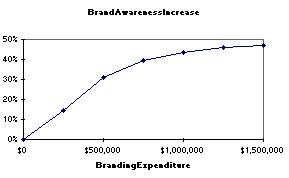
About half of your brand awareness will carry over from the previous period. The curve shows the increase in brand awareness (on top of what is carried over) achieved by various levels of expenditure.

3. This video is an excerpt from the MikesBikes Advanced Sales & Marketing video, which sums up why Branding plays an integral part in your Marketing strategy.

The same principles also apply in MikesBikes Introduction.

Do you have a question suggestion for our next question of the week? Send us a message.

MikesBikes Business Simulation Quiz Competition

MikesBikes SuperFan Quiz Competition

Are you a MikesBikes SuperFan?

Take one of the Quizzes below for the opportunity to be awarded the title of MikesBikes SuperFan and win one of two US$50 Cash Prizes! Participants have up to three attempts to answer the most correct questions in the fastest time.

Like the Smartsims Facebook Page to receive updates and winner announcements.

Competition closes 31 May 2017 (USA EST). Full terms and conditions here.
Continue reading MikesBikes SuperFan Quiz Competition

Action Learning and Business Simulations

Why Action Learning is Essential for Teaching Today’s Students

Increasing demands on instructors and pressure on tertiary Institutions to provide work-ready graduates, instructors are looking for new ways to engage their students as a means of ensuring success.

What is action learning?

Action learning is not one specific teaching method, but rather a philosophy and an approach which encourages action within a team environment where learning is every participant’s job. All action learning approaches are philosophically rooted in theories of learning from experience, as practiced collaboratively with others through some form of action research.

Education scholars agree upon three principles that form the foundation of any action learning course:

  1. Learning is acquired through action and dedication to the task at hand.
  2. Knowledge creation and utilization are collective activities, wherein, learning becomes everyone’s job.
  3. Users demonstrate a learning-to-learn aptitude, allowing them to question the underlying assumptions of practice.

Why action learning?

In the modern teaching environment, more is needed from teaching faculty in communicating and delivering course content. Socratic and other traditional teaching methods are not engaging students as effectively as they once did. Students now need to be actively involved in their learning, rather than passively participating.

Employing action learning principles within a course enables students to resolve and take action on real problems in real time, and learning while doing so. Participants become engaged within the learning process and learn transferrable skills in the process. Further, by encouraging learning through doing within and among groups, an individual participant realises that their viewpoint is just that – it is no more than a hypothesis. Through this learning outcome, the participant reaches a reflective state. These reflective states are arguably where significant learning is achieved through challenging assumptions and preconceptions about business.

It is thought that action learning also increases an individual’s capacity to collaborate. By being stimulated intellectually by their peers within this environment, they gain access to other people’s worldviews, therefore, enabling them to challenge their own views and behaviours, providing further opportunities for growth. The team-based nature of action learning often encourages new theories or ideas which may not have been reached through traditional teaching methods.

The outcomes from action learning produce greater self-efficacy along with heightened states of autonomy, meaning and responsibility. Authors agree that action learning is the first step for participants in a journey toward greater self-insight, greater capacity to learn from experience, and greater awareness of the political and cultural dimensions of an organization. For organizations, it is often a first step toward linking individual learning with systemic learning and change (Marsick & O’Neil, 1999).

What does action learning look like?

A typical action learning program covers aspects of traditional learning models, where a series of presentations might be given on a specific theory or topic, and then builds on this through applying prior and new knowledge to a live project. This environment then provides intrinsic feedback from the work itself, rather than from an external authority (e.g. graded assignments).

Throughout the course, participants continue to work on the project with assistance from other participants, as well as from qualified facilitators, who help foster an understanding of the work as well as the theories taught. The facilitator in each team is critical to change agency. It is important for them to observe teams during meetings and provide feedback to individual members and/or the team. However, the facilitator in this scenario should not become a supervisor, rather, only to encourage free discussion, reflection, thought and critical analysis.

Assessing action learning

Measurement may require key performance indicators that are not typically used within traditional teaching methods, since individuals and teams create their own workplace reality through ongoing reflection. However, conventional methods for assessment (survey and evaluation/examination) can still be employed based on the learning outcomes of the training or course. Inman and Vernon (1997)  suggest the use of narratives and dialogical approaches to assessments, such as scenarios, to embed learning through consensus-building processes.

What forms can action learning take?

One of the more common forms of action learning within higher education is business simulators. These are employed alongside traditional lectures as a teaching or learning resource where students form a management team to run their own virtual company. To succeed in action learning participants must apply their learned knowledge to a live and responsive project (their simulated company). This environment poses multiple different situations and problems that students must address over the course of the simulation.

As the simulation progresses participants receive both intrinsic and extrinsic feedback from the simulation itself, for example Shareholder Value (in MikesBikes IntroMikesBikes Advanced) and Marketing Contribution (in Music2Go Marketing & AdSim Advertising), and from their group. Business simulations also provide the perfect opportunity to integrate reflective assignments to explore the scenario and identify what students take away from the action learning exercise.

Throughout this process, instructors and professors (which under this philosophy are the learning facilitators), work alongside students to facilitate group discussion. This can be done in class, workshops or group meetings.

Contact us if you would like more information on simulations and action learning, or access to a free demo account for one of our simulations.