Category Archives: News

a photo of a person climbing a mountain to symbolize grit

Why Business Simulations Are One of the Most Effective Ways to Teach Grit

In most organizations or classrooms, we still treat knowledge as if it were enough. We teach frameworks, models and tools then expect people to perform under uncertainty, pressure and failure as if those conditions were already trained. But in reality, success in business rarely comes down to what you know. It comes down to whether you can keep going when things stop working. That idea sits at the heart of the concept of grit, popularized by psychologist, Angela Duckworth.

Grit is not talent. It is not intelligence. It is a combination of passion and perseverance over time, especially when progress is slow, feedback is unclear, and setbacks are inevitable. This raises an important question:

If grit is so important, why do most learning environments still fail to develop it?

The Problem: We Teach Thinking, Not Endurance

Traditional business education tends to focus on correctness.

Students are rewarded for:

  • Getting the “right” answer
  • Memorizing frameworks
  • Performing well in structured assessments

But real business environments don’t behave like exams.

They are:

  • Ambiguous
  • Fast-changing
  • Emotionally demanding
  • Full of partial information and imperfect decisions

This creates a gap: people may understand business concepts, but struggle to persist when outcomes are uncertain or negative.

Grit is not built in clarity. It is built in friction.

Why Business Simulations Change the Equation

Business simulations fundamentally change how learning happens.

Instead of passively absorbing knowledge, learners are placed inside dynamic environments where they must make decisions, observe consequences and adapt continuously.

This structure creates the exact conditions under which grit develops.

1. Safe Failure with Real Feedback Loops

    In a simulation:

    • You make decisions
    • You see immediate consequences
    • You try again with better insight

    Failure is not theoretical, it is experiential, but also safe.

    This repetition builds one of the core elements of grit: the ability to persist through setbacks and adjust strategy without disengaging.

    2. Long-Term Thinking Under Pressure

    Unlike traditional assessments, simulations unfold over multiple rounds or time periods.

    Participants must:

    • Balance short-term trade-offs with long-term strategy
    • Stay committed to a direction while adapting tactics
    • Learn that success is cumulative, not instant

    This mirrors real business reality far more closely than one-off problem solving.

    And more importantly, it trains sustained effort, which is the essence of grit.

    3. Emotional Resillience in Uncertainty

    Simulations introduce controlled unpredictability:

    • Competitors behave unexpectedly
    • Market conditions shift
    • Strategies fail in surprising ways

    This creates emotional friction: frustration, doubt, and recalibration.

    Grit is not just cognitive. It is emotional endurance – the ability to stay engaged even when outcomes are not favorable.

    Simulations train exactly that.

    4. Identity Shift: From Learner to Decision-Maker

    One of the most powerful insights from Duckworth’s work is that grit is reinforced by identity.

    People who persist are not just trying harder, they begin to see themselves as the kind of person who persists.

    Business simulations support this shift by allowing participants to act as decision-makers, not passive learners.

    Over time, this builds a powerful belief: “I can figure things out through iteration.”

    That belief is the foundation of long-term performance.

    The Difference Between Knowing and Becoming

    Traditional learning answers the question: “Do you understand the concept?”

    Simulations answer something deeper: “Can you keep improving when it stops working?”

    That difference matters, because in real business environments:

    • Plans fail
    • Market shifts
    • Assumptions break
    • Pressure increases

    Only those who persist through iteration continue to grow.

    That grit is in action.

    What This Means for Organizations and Educators

    If we take grit seriously as a capability, not just a personality trait, then learning design needs to change.

    Business simulations can play a central role in that shift:

    • In corporate training: developing resilient leaders who adapt under pressure
    • In high schools and universities: bridging the gap between theory and execution
    • In talent development: identifying not just knowledge, but persistence and learning agility

    We often say we want “future-ready talent,” but future readiness is not just about knowledge. It is about endurance, adaptability, and the ability to keep going when the path is unclear.

    Final Thoughts

    If grit is the ability to stay committed through difficulty, then learning environments must contain difficulty by design.

    Business simulations do not just teach business concepts. They create repeated opportunities to fail, adapt, persist, and improve. In doing so, they don’t just build knowledge. They build something far more valuable: “The capacity to keep going when it matters most.”

    So here’s the real question: Are you building environments where people can struggle productively or ones where they can only succeed on paper?

    If it’s the latter, don’t expect grit to show up when it matters. If it’s the former, business simulations are a powerful place to start.

    See how Smartsims Business Simulations fit into your teaching or training programs.

    Student in the library surrounded by books

    Why Students Remember What They Do, Not What They Read

    Walk into a typical classroom and you’ll see a familiar scenario: students reading textbooks, listening to lectures, and taking notes. Yet ask those same students a week later what they remember, and much of that information has faded.

    This isn’t a failure of effort, it’s a reflection of how human memory actually works. Decades of research in cognitive science and education point to a simple but powerful truth: students remember far more when they actively do something with knowledge rather than passively receive it.

    The Science Behind “Learning by Doing”

    image of student climbing ladder

    The idea that action improves memory isn’t new. A-well known principle in psychology, often called the “enactment effect,” shows that people tend to remember actions they perform better than those they only observe or read about.

    Learners who physically performed tasks consistently demonstrated stronger memory recall than those who only watched or read instructions.

    Why does this happen?

    When students do something, multiple cognitive systems are activated at once:

    • Motor activity (physical or simulation action)
    • Decision-making processes
    • Emotional engagement
    • Contextual understanding

    This creates richer memory “encoding,” making the information easier to retrieve later.

    Passive Learning Feels Effective—But Isn’t

    One of the biggest challenges in education is that passive learning feels productive. Reading a chapter or listening to a lecture gives students a sense of familiarity. But familiarity is not the same as retention.

    Research on memory shows that re-reading material leads to weaker long-term retention than actively retrieving or applying knowledge.

    In one study, students who repeatedly tested themselves on material remembered significantly more after a week than those who simply re-read the same content multiple times.

    In other words:

    • Doing = long-term memory
    • Reading = short-term confidence

    Experiential Learning: Turning Knowledge Into Experience

    image of student applying learned concepts

    This is where experiential learning comes in. Defined as “learning by doing,” it involves engaging students directly in experiences where they must apply concepts, reflect on outcomes, and adapt their thinking.

    Educational theorist David Kolb described learning as a cycle:

    1. Do (experience)
    2. Reflect
    3. Think (form concepts)
    4. Apply

    This cycle transforms abstract ideas into usable knowledge. Students are no longer memorizing theories, they are using them.

    Studies show that this approach:

    • Builds real-world skills like problem-solving and adaptability
    • Improves retention
    • Increases engagement

    What This Means for High School Education

    image of student thinking about tasks

    If the goal of education is long-term understanding, not just short-term test performance, then relying solely on reading and lectures is not enough.

    Students need opportunities to:

    • Make decisions
    • Test ideas
    • Experience consequences
    • Reflect on outcomes

    This is especially true in subjects like business, where success depends on applying knowledge in dynamic, unpredictable situations.

    Where Business Simulations Fit In

    Business simulations are a powerful example of experiential learning in action.

    Instead of reading about how to run a business, students:

    • Set prices
    • Compete with peers
    • Manage budgets
    • Read and interpret reports
    • Respond to market changes

    They experience the consequences of their decisions in real time, something a textbook simply cannot replicate.

    This transforms learning from abstract to tangible:

    • Concepts become strategies
    • Mistakes become lessons
    • Knowledge becomes experience

    And most importantly, it sticks.

    Rethinking What It Means to “Learn”

    image of student thinking about what they are learning

    The evidence is clear: students don’t truly learn by exposure, they learn by engagement.

    Reading and lectures still have a place, but without opportunities to apply knowledge, much of that learning fades quickly.

    If schools want students to retain what they learn and be able to use it beyond the classroom, they need to shift from:

    • Passive consumption to Active participation
    • Memorization to Application
    • Knowing to Doing

    Because in the end, students may forget what they read, but they rarely forget what they’ve done.

    If we want students to truly retain what they learn, we need to give them more opportunities to apply it. Smartsims Business Simulations are one practical way to start bringing real decisions, real consequences, and real learning into the classroom.

    Ready to see it in action? Learn more or get in touch with our team.

    student teams playing business simulation

    A Beginner’s Guide to MikesBikes Introduction Business Simulation (Based on Real Instructor Experience)

    If you’re preparing to use MikesBikes Introduction, either as a student or an instructor, it helps to understand what the simulation actually looks like in practice.

    Drawing from real classroom experience, this guide breaks down how MikesBikes works and what you can expect.

    What is MikesBikes Introduction?

    MikesBikes builds students’ knowledge and confidence over time as they progressively take control over their own virtual bicycle manufacturing company. They start by managing the marketing decisions for their company’s only product, a Mountain Bike. Over the course of the simulation they are introduced to other areas of the business; Distribution, Operations, Product Development, Finance, and launching new products into emerging markets.

    How the Simulation Works

    The simulation run in two phases:

    • Single-Player Phase: Students compete individually against a computer opponent and can move freely between decision periods (rollovers).
    • Multi-Player Phase: Students compete in teams (or individually if needed), making decisions by scheduled deadlines that you set.

    After each round, results are immediately available, and students can refine their strategy moving forward.

    What Makes It Different From Traditional Learning

    One consistent insight from instructors is how quickly students shift from passive learning to active problem-solving.

    Instead of focusing on theory alone, participants:

    • Analyze performance data
    • Debate strategic trade-offs
    • Adjust decisions based on outcomes

    This creates a learning loop that closely reflects real-word business environments.

    Common Challenges New Users Face

    Instructor feedback highlights a few recurring challenges:

    • Over-focusing on one area (e.g. marketing without operations support)
    • Ignoring financial constraints
    • Making short-term decisions without long-term planning

    Recognizing these early can significantly improve performance.

    Tips for Getting Started

    Based on classroom experience:

    • Take time to understand the reports – they drive better decisions
    • Align your team before submitting decisions
    • Balance growth with financial stability
    • Expect early mistakes. They’re part of the learning process

    Why It Works

    What stands out most from instructors is how the simulation changes engagement.

    Students move from asking “what do I need to know?” to “what should we do next?”

    That shift is where deeper learning happens.

    Final Thoughts

    MikesBikes Introduction is most effective when treated not just as a tool, but as an experience.

    By simulating real business decisions and consequences, it helps bridge the gap between theory and practice in a way traditional methods often can’t.

    Ready to bring MikesBikes into your classroom? Get in touch to learn how to integrate it into your course or request a demo.

    This article is based from Russell E. Holmes’ article on his experience from a MikesBikes critic to true fan.

    Corporate training program using business simulations

    Inside Modern Leadership Development: The Growing Role of Business Simulations

    Organizations are increasingly turning to experiential learning in their management training programs to enable their leaders to practice decision-making in complex, realistic scenarios. atrain GmbH have embraced this approach by integrating business simulations in their leadership journeys; most recently through a large-scale program for an international automotive company.

    Who is atrain?

    atrain logo

    For over 20 years atrain have partnered with organizations worldwide to develop leadership and enable sustainable transformation. With more than 60 global clients across 25 countries, atrain has developed over 35,000 people through coaching engagements, leadership journeys, and tailored training programs.

    At the core of atrain’s work is the belief in realizing people’s true potential. The company positions itself as a trusted partner for its clients, designing development journeys that are not only impactful in the short term, but also sustainable over time.

    Using MikesBikes in the Leadership Journey

    This leadership journey was for 60 aspiring executives from four regions of a global automotive company.

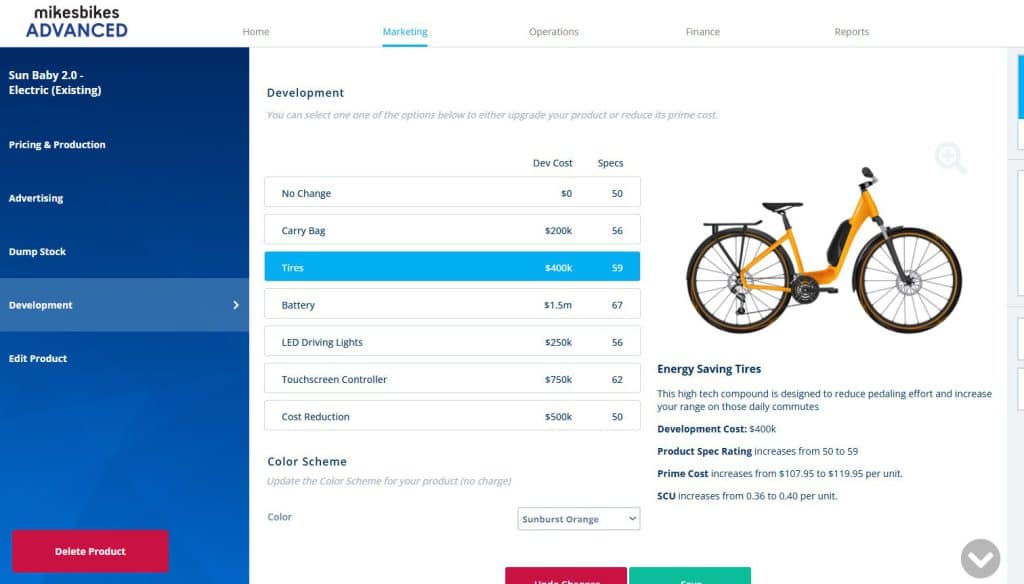
    screenshot of prod dev screen of MBA

    The business simulation workshop featured over two-days where participants were split into groups of four to five using the MikesBikes Advanced simulation. They were tasked with increasing the shareholder value of their simulated companies. Program facilitators also provided targeted inputs on topics such as strategy, company-specific KPIs, and team dynamics.

    Of importance to this program was to allow participants to make mistakes. This enabled them to reflect on the consequences of their decisions and improve their approach over time. Unforeseen market changes were introduced to mirror real-world uncertainty, complemented by theoretical input on how leaders in the real-world deal with volatility and ambiguity.

    Over the workshop each management team were required to present to shareholders on strategy and performance. Facilitators also provided reflections on how teams collaborated, how decisions were made, and which behavioral and strategic levers led to success or failure.

    The Experience

    The response from participants to the simulation component was overwhelmingly positive. Many highlighted the gamified nature of the experience, which made learning both engaging and memorable.

    students playing business simulation

    “The methodology, the touched topics and the experienced trainers make this program very valuable to become a better leader.”

    Advice for Annika Koch (Program Manager) to others considering a simulation for leadership and management training:

    “The simulation is a great add-on and is a lot of fun. Take enough time to prepare the program [and] getting to know the simulation. The Smartsims team is extremely helpful and we greatly enjoyed the collaboration. The simulation can be used in lots of ways, from finance trainings to business leader trainings like ours. Adding your own storyline around it is crucial to make it come alive.”

    Discover how experiential learning can transform your team. Start developing your future leaders today.

    Students with ipads playing simulation

    Millennials and Gen Z: Redefining the Future of Education

    Millennials were once the “hot topic” generation. Now, Gen Z has joined the conversation and together they are reshaping expectations in higher education.

    While older generations may debate their characteristics, one thing is clear: today’s students learn differently. They are digital natives. They expect interaction. They value relevance. And if institutions don’t adapt, students will simply look elsewhere, whether that’s another university or the rapidly expanding online learning industry.

    Higher education must evolve to meet the needs of both Millennials and Gen Z or risk falling behind.

    Gamification: Modern Education for Digital-First Generations

    Traditional lecture-only teaching methods no longer hold attention the way they once did. Sitting in a lecture hall listening to theory alone often results in disengagement and poor outcomes.

    Millennials grew up alongside the rise of the internet. Gen Z grew up fully immersed in it. From video games to social media to on-demand content, interactive digital experiences are second nature to them.

    That’s why gamification is such a powerful educational strategy.

    Gamifying a business course means creating active, experience-based learning activities that include:

    • Interaction and competition
    • Immediate feedback
    • Decision-making with visible consequences
    • Recognition and achievement systems

    It allows students to learn at their own pace, make strategic choices, and experience real-world business outcomes in a risk-free environment.

    Courses that incorporate tools like marketing or management simulations consistently show higher engagement and stronger performance outcomes. And it’s no surprise — they’re interactive, immersive, relevant, flexible, and accessible.

    Across the globe, colleges and universities are introducing strategy simulations and business simulation games to better connect with today’s learners.

    Business Simulations: Gamification Meets Experiential Learning

    At their core, educational business simulations create experiential learning environments designed to improve student success.

    Rather than reading about business decisions, students make them.

    By managing their own virtual company, learners apply theory in a dynamic, multi-sensory setting. They must analyze data, develop strategies, respond to competitors, and take responsibility for results.

    This ownership transforms learning from passive consumption into active experience.

    For Millennials and Gen Z students who value autonomy, feedback, and real-world relevance, this approach resonates deeply. The experience becomes personal. The lessons stick. The confidence grows.

    The outcome? Greater engagement, stronger motivation, improved learning retention, and enhanced career readiness.

    Smartsims delivers business simulations that bring gamification and experiential learning to classrooms in over 20 countries, helping institutions meet the expectations of today’s digital-first generations.

    Ready to modernize your business course? Contact us today.

    Student Winne imagery of the 2025/26 MikesBikes World Champs

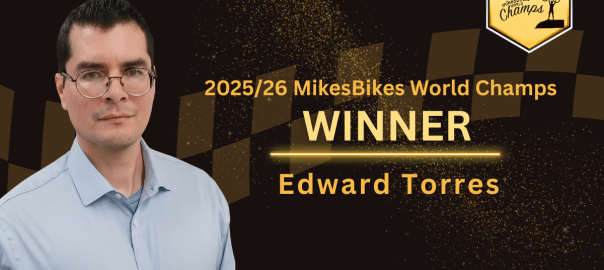
    2025/26 MikesBikes World Champs Winner: Edward Torres

    From early uncertainty to a championship finish, Edward Torres from California State Polytechnic University, Pomona proved what it takes to win on the global stage. Competing against top students from around the world, Edward demonstrated exceptional strategic thinking, resilience, and data-driven decision-making to achieve the highest shareholder value in the competition. His journey from early setbacks to a strong final-round comeback showcases the power of disciplined execution and smart risk-taking. Edward shares his MikesBikes journey, from the beginning to achieving the 2025/26 MikesBikes World Champs title.

    From Startup to Champion: My MikesBikes Journey

    Photo of Edward Torres from CalPoly Pomona, 2025-26 MikesBikes World Champs Winner

    Hello! My name is Edward Torres, winner of the 2025/26 MikesBikes World Championship. This global competition brought together students from top universities, and the leaderboard shifted constantly. While I wasn’t always sure my strategy would win, a strong final-round comeback helped me achieve the highest shareholder value.

    In this summary, I’ll share how I turned a startup bike manufacturer, Pedal Pusher, into a profitable business—and the lessons I learned along the way.

    Competition Journey

    My journey began with a chaotic qualifier round. Due to risk and uncertainty—factors the simulation captures well—my group over-drafted millions early on. I recovered to finish 6th, which secured a place in the championship rounds against nine strong competitors. My goal wasn’t just to win, but to build a healthy, growing business.

    In the finals, I focused on operational excellence. Drawing from my experience as an IT field service technician, I treated the business like a system that needed to run efficiently. I invested heavily in worker training, preventative maintenance, supplier relationships, and quality systems. This reduced waste and improved productivity.

    As quality improved, I increased mountain bike prices by 15%, confident customers valued performance. This strategy paid off, as my market share steadily grew.

    Overcoming Challenges

    The biggest challenge was scaling from a single-product firm to a multi-segment business. I expanded into electric, road, cruiser, and kids bikes—each with different customer priorities. This required careful balance between production, pricing, marketing, and investment.

    Mistakes were costly. Underproduction led to lost sales, while overproduction drained cash. At the same time, competitors could enter any segment and reduce market share.

    To manage this complexity, I relied on data. I used Python and Google Colab to analyze simulation data, built models to optimize advertising spend, and conducted risk assessments in Google Sheets. Dashboards in Looker Studio helped me track performance across rounds.

    This data-driven approach allowed me to forecast demand accurately, minimize waste, and maintain profitability—even under competitive pressure.

    Turning Point

    Early in the competition, I was in the middle of the pack due to high costs. But my investments began paying off.

    I built the largest factory, trained an efficient workforce, minimized defects, and improved my products through R&D. With strong economies of scale, I was ready to shift strategies.

    I lowered prices, increased advertising, and expanded across all segments—confident I could meet demand profitably. I also issued the highest dividends in the final rounds.

    The results exceeded expectations: $190 million in retail sales and a shareholder value of $269.54 per share. I finished with zero lost sales and minimal inventory—proof that my operational strategy worked.

    Key Lessons

    This experience reshaped how I view business.

    Success requires discipline, patience, and calculated risk-taking. Investing in operations and marketing often felt like gambling, but informed decisions can shift the odds in your favor.

    I also learned the importance of accountability. I made mistakes—over-drafting and mismanaging inventory early on—but improving each round was key to success.

    Above all, I learned that effective money management requires constant attention. Small mistakes can cost millions. By analyzing data, forecasting demand, and tracking profitability, I ensured every investment delivered value.

    Looking Forward

    Academically, this experience helped me apply concepts from business, IT, and data analytics in a real-world scenario. It gave me confidence in handling complex, high-stakes decisions.

    Professionally, it confirmed my goal of becoming a Business Intelligence and Data professional. I plan to build on my skills by learning tools like Power BI and Tableau, deepening my knowledge of SQL, and advancing my expertise in predictive analytics.

    My ultimate goal is to use data to drive strategic decisions that lead to sustainable growth.

    Closing Reflections

    Representing California State Polytechnic University Pomona was an honor. The school’s “Learn by Doing” philosophy was fully realized through this competition, where classroom concepts were tested in a high-stakes environment.

    I’m grateful to the faculty who shaped my skills, my competitors who pushed me to improve, and my family for their constant support. This achievement reflects not just my effort, but the people and experiences that helped me grow.


    Want to dive deeper into how Edward Torres became the 2025/26 MikesBikes World Champion? Check out his full story, packed with insights and lessons learned from his journey to the top.

    Check out the MikesBikes World Champs Past Winners.

    From student to professional, showing how Business Simulations Build Career‑Ready Skills

    From Engagement to Employability: How Business Simulations Build Career‑Ready Skills

    In an era where traditional classroom instruction alone isn’t enough to prepare students for the workforce, business simulations are emerging as powerful tools that bridge academic learning with real‑world skills. By placing students in immersive, interactive scenarios, simulations help transform engagement into employability, giving learners a head start on the competencies employers value most.

    Active, Experiential Learning

    Business Simulations invite students to do rather than just listen. When students manage a virtual business, they actively experiment, make decisions, and witness the consequences of their actions in a risk‑free environment. This hands‑on involvement boosts understanding and retention while making learning more engaging and relevant.

    Developing Critical Soft Skills

    Beyond academic content, business simulations foster communication, collaboration, problem‑solving, and adaptability, which are skills increasingly sought after in today’s job market. Working in teams, students learn to articulate ideas, listen to others, negotiate solutions, and manage time and resources under pressure.

    Real‑World Context and Career Insight

    Business simulations contextualize learning by immersing students in authentic scenarios that reflect real workplace practices. For example, instructors may require a final presentation or a mock boardroom meeting in which students present their initial strategy, explain how they adapted to changing market conditions, and evaluate their results and key takeaways. This process strengthens both presentation and critical reasoning skills.

    Beyond deepening subject knowledge, these experiences also help students envision themselves in potential careers and develop a clearer understanding of the pathways needed to achieve them.

    Feedback and Reflective Growth

    Immediate feedback is a hallmark of business simulations. Students can replay scenarios, refine strategies, and reflect on their choices. This iterative cycle builds confidence, encourages self‑directed learning, and strengthens decision‑making, which are an essential trait for career success.

    Bridging School and Work

    By aligning educational experiences with workplace expectations, simulations help ensure that students graduate not just with certificates, but with competencies. They make schoolwork meaningful and help learners transition smoothly into internships, further education, or employment.

    Business Simulations Give Students the Leading Edge in Job Interviews & the Workplace

    In the video below, Dr. Darl Kolb explains how business simulations give students confidence, which affords them a leading edge in job interviews and in the workplace.

    Start bridging the gap between classroom learning and career readiness. Bring business simulations into your teaching today.

    secrets to winning MikesBikes

    Secrets to Winning at MikesBikes: Advice from a Hall of Fame Student

    Winning at MikesBikes isn’t about luck, shortcuts, or guessing what your competitors might do next. It’s about dedication, smart decision-making, and learning from every rollover. Robinson Lu proved exactly that by earning a place on the MikesBikes Hall of Fame. In this article, we break down the key lessons behind their success and reveal the practical strategies you can use to improve your results, build confidence in your decisions, and give your team a competitive edge in the simulation.

    Master the Basics: Practice Makes Progress

    Top-performing students spend time early understanding how pricing, marketing, production, and distribution decisions interact. The more familiar you are with the reports and dashboards, the faster you’ll spot patterns and opportunities.

    Think Strategically About Profit

    Winning teams focus on shareholder value, not just short-term profit. That means balancing pricing, production volume, marketing spend, and long-term brand development.

    Study the Market and Your Competitors

    Markets evolve every rollover. Consumer preferences change, competitors shift strategy, and successful teams adapt using data rather than instinct.

    Learn From Mistakes

    Every poor decision is a data point. High-performing players reflect on what didn’t work and adjust their strategy rather than panic or overcorrect.

    Use the Resources Available

    Tutorial videos, manuals, and reports exist to help you succeed. Students who consistently use these resources gain a measurable advantage.

    Check out the Smartsims Support Center for additional support.

    Mindset Matters

    Confidence, curiosity, and consistency separate top teams from average performers. Treat MikesBikes like a real business and the results will follow.

    Learn more about business strategy in MikesBikes:

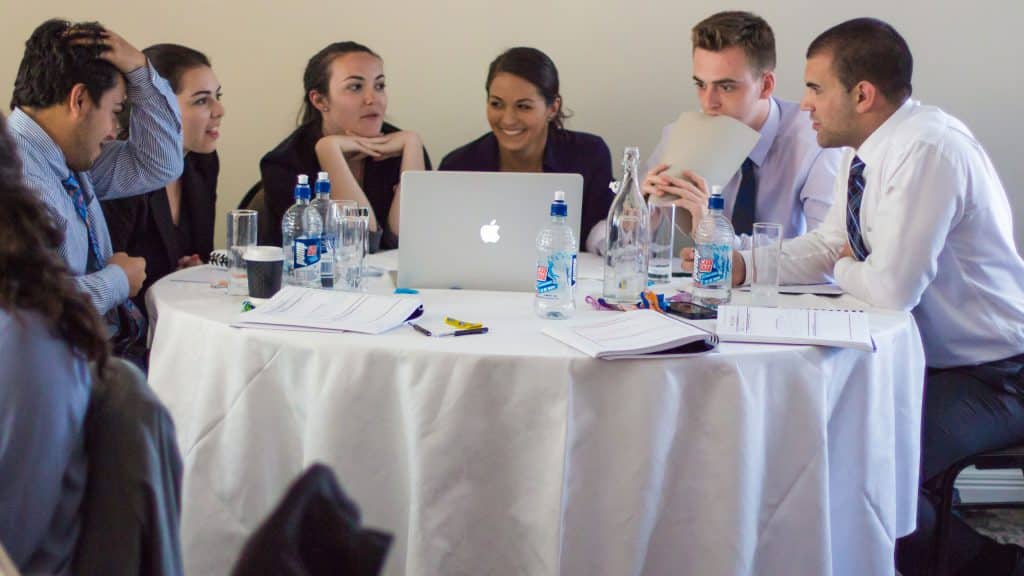
    Round table discussion of students with their laptops

    From Bankruptcy to Breakthrough: Why MikesBikes Advanced Is an Ideal Capstone Simulation for Strategic Management Courses

    Teaching strategy at the senior undergraduate or MBA level presents a familiar challenge: students may understand individual business concepts, but struggle to integrate them into cohesive, defensible strategic decisions. Case studies offer valuable discussion, yet they rarely allow students to experience the consequences of their choices.

    This is where MikesBikes Advanced excels. As a comprehensive strategy simulation game and management simulation, it enables students to apply theory, test assumptions, and adapt strategy in a competitive, data-driven environment — making it particularly effective as a capstone simulation for higher-education business programs.

    Learning Strategy Through Consequences, Not Just Concepts

    A recent classroom experience illustrates the power of simulation-based learning. During a strategic management competition at NJIT, one student team entered the MikesBikes Advanced simulation confident in their planning — only to drive their company into bankruptcy in the early rounds. Rather than being penalized academically, the failure became a turning point.

    students at NJIT strategic showcase showdown explaining their MikesBikes strategy

    Students revisited financial statements, reassessed their market positioning, and reconsidered operational trade-offs. With each subsequent decision round, they refined their strategy, responding to competitive signals and performance data. By the end of the simulation, the same team had recovered and delivered one of the strongest overall performances.

    Why MikesBikes Advanced Works in Higher Education

    MikesBikes Advanced is designed for advanced undergraduate and postgraduate learners who are ready to synthesize knowledge across disciplines. Students manage a virtual bicycle manufacturing firm, making integrated decisions across strategy and competitive positioning, marketing and pricing, operations and capacity planning, product development, and financial performance.

    A Natural Fit for Capstone and Strategic Management Courses

    Instructors often seek a capstone simulation that encourages holistic thinking rather than isolated functional optimization. MikesBikes Advanced supports this by requiring students to develop a clear competitive strategy, align functional decisions with long-term objectives, interpret complex performance data, and adapt strategies based on market and competitor feedback.

    Supporting Evidence-Based Teaching and Assessment

    For instructors, MikesBikes Advanced also offers strong alignment with learning assurance and assessment requirements. Performance metrics, decision logs, and comparative results provide tangible evidence of student engagement and learning progression.

    MikesBikes Advanced really moves students beyond theory, enabling them to experience the complexity, ambiguity, and consequences of real-world strategic management. Request a demo, access instructor resources, or speak with an academic advisor to explore how MikesBikes Advanced can support your strategic management or capstone course.

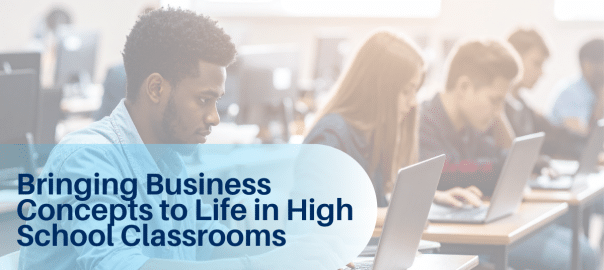
    students using business simulations in high school classrooms

    Bringing Business Concepts to Life in High School Classrooms

    As high schools place greater emphasis on real-world learning and career readiness, business courses face a familiar challenge: how to make foundational concepts engaging, relevant and memorable for students with little to no prior exposure to business.

    One instructional approach gaining traction is the use of business simulations, which allow students to learn by doing, making decisions, seeing outcomes, and adjusting strategies in a realistic business environment.

    What Research Tells Us

    A 2024 study examining the Effect of Business Games on High School Students’ Learning Perception and Satisfaction found that students who participated in business games reported higher levels of perceived learning and satisfaction compared to more traditional instructional approaches. Importantly, these positive effects were observed at the high-school level, reinforcing that simulations are not just effective in higher education, but also appropriate for secondary learners.

    These findings align with broader research on experiential learning, which shows that students learn more effectively when they actively apply concepts rather than passively receiving information.

    Why Simulations Work for High School Business Students

    High School Business courses introduce a wide range of concepts: marketing, finance, operations, management, and strategy. For many students, these topics can feel abstract when taught in isolation.

    Business simulations help by:

    • Placing concepts in a realistic, integrated context
    • Encouraging decision-making and critical thinking
    • Providing immediate feedback on decisions
    • Increasing engagement and motivation through active participation

    Rather than memorizing definitions, students experience how business decisions interact and affect outcomes.

    A Research-Aligned Approach to Business Education

    Business simulations such as MikesBikes Introduction are designed specifically for High School students. The simulation mirrors core business functions while remaining intuitive for first-time learners, allowing teachers to focus on discussion, reflection and concept reinforcement.

    Key design principles include:

    • Gradual introduction of new decision areas so students don’t get overwhelmed with business concepts
    • Balanced complexity for high school students
    • Opportunities for teamwork, reflection, and strategy adjustment

    This approach reflects what current research suggests: when students are actively involved in realistic business scenarios, they are more likely to perceive the learning as meaningful and engaging.

    Supporting Teachers and Students

    Instructors consistently report that simulations help:

    • Connect theory to real-world application
    • Increase student confidence in understanding business concepts
    • Spark richer classroom discussions

    When used alongside traditional instruction, business simulations can serve as a powerful tool to reinforce learning and prepare students for further business education.

    Research continues to highlight the value of business simulations in high school education, particularly for improving student engagement and perceived learning. For high school business courses, simulations offer a practical way to bring foundational concepts to life, helping students not just learn about business, but experience it.

    Interested in bringing simulation-based learning into your classroom? Explore how Smartsims can support your teaching goals.