Category Archives: News

ASU logo

Teaching Strategic Management Online at University of Colorado Boulder

With many courses transitioning online we thought it timely to interview Scott Livengood from University of Colorado Boulder. Scott has a great deal of experience using our MikesBikes Advanced Business Simulation in his capstone Strategic Management course which he teaches in both face-to-face and online formats.

How do you use MikesBikes in your course?

I use MikesBikes Advanced primarily for my capstone Strategic Management undergraduate course.

I have three “rounds” of play:

  • The first is the Practice Round, where students compete directly against a computer rival in two possible customer segments (Adventurer and Leisure). This round is not graded but gives the students some exposure to the simulation so they can learn about its mechanics and also so they can experiment with and fine tune their strategies.
  • Next comes the Solo Round, where the environment is exactly the same as the Practice Round (i.e. only one computer rival and two segments), except the rollovers occur on my schedule rather than giving the students the ability to roll forward, roll backward, or to reset the simulation. This occurs for five to six rollovers, depending on the length of the course.
  • Last comes the Competitive Round, where students are assigned to “worlds” of approximately eight firms and they compete head to head with other students in the course, also over five or six rollovers. The Competitive Round also introduces three other customer segments (Racer, Commuter, Kids) and a new distribution outlet.
How do you introduce MikesBikes to students?

I have created a Beginner’s Guide where I essentially walk students through the first two years of decisions, using screen shots and references from the simulation itself. I have also created a video with my voiceover using the simulation while following the Beginner’s Guide. I also give some background regarding the purpose and learning objectives of the simulation.

Do students use MikesBikes in teams or individually? If in teams, how do you facilitate teamwork in an online environment?

I’ve experimented with using groups of students, but have found that to be ineffective, mainly due to two reasons: coordination and effort (often students don’t respond to communication and one or two students end up doing all the work and making all the decisions) and learning (students usually use the “divide and conquer” method where one student is in charge of marketing, a different one in charge of new product development, etc. whereas the way I do it, every student has to learn about all the various parts of the organization and how they fit together, which I think enhances the benefit gained). Thankfully, MikesBikes Advanced is complex enough that students have to dive in and learn new things, but not so complex that an individual student can’t make all the decisions.

What simulation related assessments and/or activities do you use?

Students are required to write a paper on External Analysis (Porter’s Five Forces), another paper on Internal Analysis (Resource-based View of the Firm), and another paper on SWOT Analysis and Business-level Strategies during the Practice Round to create a Strategic Plan for their Solo Round.

After the Competitive Round, they write a longer Simulation Reflection Paper on lessons learned from the Solo Round, a Competitive Analysis based on their biggest rivals, challenges with Diversification, exploration of a Merger or Acquisition (why or why not to pursue), and their biggest takeaway from the simulation.

These assessments align with the course material on Business-level Strategies and Corporate-level strategies and count for approximately 35% of their overall grade for the course.

In addition, a small percentage of their grade (5% for Solo and 5% for Competitive, which is mandated by our course coordinator – I would prefer 10% for the Competitive Round) is based on their actual performance on the simulation itself, using final SHV as the measure.

I break the students into “quartiles” based on their final SHV and assign a grade accordingly (top 25% receive 50 points, next 25% receive 40 points, next 25% receive 30 points, and the bottom 25% receive 20 points). This helps to reward students who perform well but isn’t overly strict for those who struggle with the simulation.

I impose a 20% SHV penalty for students who are insolvent during the simulation after providing a cash infusion to help them continue to be able to participate.

What other applications do you use?

We use Canvas as our Learning Management System and I use that as an interface with students. I do use VoiceThread for students to give presentation, but that’s not directly related to the simulation itself.

Do you have any tips for using a business simulation in an online course?

I love using a business simulation, particularly over the typical case study method. Cases are usually obsolete, have students analyzing other people’s decisions, and don’t provide an opportunity for students to practice implementation, assessment, and adjustment of their strategic decisions. However, with a simulation, students are able to make decisions for their own firms, see the results of those decisions, and adjust accordingly, all within a dynamic (and fun) environment. It’s taken me a few years to tinker with different ways to use the simulation, but I like what I’m currently doing and feel the students gain a great experience.

Related Articles:

USM logo

Teaching Strategic Management Online at USM

The MikesBikes simulation has been extremely well received by students. Many enjoy the opportunity to work in groups and learn from others, while nearly all love the ability to apply what they are learning in a safe environment.

Lisa Parrott from the University of Saint Mary uses the MikesBikes Advanced Business Simulation in her online Strategic Management and Ethics course.

Lisa has kindly shared how MikesBikes is used at USM and provided tips to others implementing a business simulation in an online course.

Introducing the Simulation & Single-Player Phase

Week 1

Students are introduced to the Single-Player (practice phase) in the first week. They are also required to read the player’s manual and watch the tutorial videos.

To ensure they have completed these tasks they take a 20-question introductory quiz where they must achieve at least 80% to pass. They are given three opportunities to obtain a passing grade, otherwise they must work with the instructor to determine if they can continue in the course. It is critical students understand how to participate in the simulation before they are put into a team environment.

Students are also asked a brief strategy questionnaire to help the instructor formulate groups.

Finally, students are asked to translate their learning into an individual analysis that looks at the lessons learned, elements of the simulation that are still unclear, and reports used to evaluate performance.

Multi-Player Phase and Assessments

Week 2

The second week moves students from the individual experience into teams. Teams are free to use any means to work virtually; Google Hangouts, Zoom, Facetime, etc.

Students first complete a team contract to establish methods of communication, meeting frequency, workload, steps for resolving conflict, and deadlines.

Before starting Multi-Player phase they create a strategic plan. This includes building a mission statement, vision, values, performance objectives, and a plan for weekly evaluation of results and decisions.

Week 3 to Week 6

Rollovers (decision deadlines) begin in week three, with two rollovers per week until week six.

Each week students conduct an individual analysis examining the decisions made by their team, explaining their performance using data from reports within the simulation and to apply the weekly learning objectives to their team performance. This presents a knowledge check at an individual level each week.

After Rollover 4 a consultation meeting is held between each team and their instructor. This provides teams the opportunity to discuss their strategic implementation and evaluate progress to determine if change is needed. Teams can also use this time to ask questions.

Week 7

Teams prepare a video presentation covering elements from their strategic plan, a SWOT analysis, best practices, analysis of overall performance, and recommendations for future directions of the company.

Week 8

The video presentation from week 7 provide the opportunity for students to see “behind the curtain” of the other companies. In response, they are required to evaluate the strategy of their competitors.

Students also complete an individual evaluation of the performance of each of their team members and how they will use skills learned in their next group experience.

The final assignment for the course asks students to write an individual analysis of the entire experience. They are asked to evaluate team performance, consider whether they would expand globally (and where) and reflect on the entire experience. The paper also addresses the ethical performance of their team, effectiveness of their strategy, and highlights three lessons learned. Students are asked to incorporate scholarly articles into this assignment to support their assessment.

Tips for using a business simulation in an online course:

  • The first few weeks are often more time consuming than normal, and it may require multiple reminders to read the manual and watch the videos!
  • When introducing the simulation, it is best to focus on one area of development at a time, and build on concepts each week. Students get overwhelmed in the first few weeks using a simulation, especially if this is their first experience. As they become more familiar with how their decisions impact multiple elements of the business they will begin developing more complicated analysis of their performance.
  • Team design is extremely valuable for a successful Multi-Player experience. Too many risk adverse students will create problems with overall performance and this should be avoided.
  • The ideal team size is three. Two will often result in group-think and passive agreement, four often yields social loafing by at least one member who may not feel they have a voice. With three there is a tie breaker for any decisions when the team is split on how to move forward.
  • The more students know how to read the reports available to evaluate the effectiveness of their decisions, the better their team will perform and often understand how different areas are connected.
  • Each team will develop at a different pace, be sure to push them forward based on their unique needs. Some may reach a higher level of understanding faster than others.

View the course syllabus: Strategic Management and Ethics Syllabus

Related Articles:

Teaching Intro to Business Online at DMACC

Des Moines Area Community College (DMACC) use our MikesBikes Introduction Simulation in their Introduction to Business course. The course is run in both face-to-face and online formats.

How do you use the MikesBikes Simulation in BUS102?

MikesBikes is used as a supplement to the material that we cover in class. The students are given approximately 45 minutes in class during the week (in face-to-face classes) to meet with their team and review their possible decisions. In an online class, the students compete individually.

How do you introduce MikesBikes to students?

MikesBikes is introduced to students in multiple announcements during the first week of the online class. These announcements direct students to folders in the online class containing Smartsims’ introductory videos and tutorials. In addition, after watching the videos, students must complete a quiz showing that they have a basic understanding of the simulation.

Do students use MikesBikes in teams or individually? If in teams, how do you facilitate teamwork in an online environment?

With the online course offering, students compete individually. If I were to offer the simulation in teams, as opposed to individually, I would encourage students to use free online meeting software such as Zoom Meetings or Microsoft Teams, and to meet at least once a week online.

Do you implement any simulation related assessments?

Primarily, the students are graded on their final shareholder value. There aren’t really many graded assessments in my online class. I have colleagues who have students present a final MikesBikes presentation at the end of the simulation.

What other applications do you use to help deliver your online course?

My college utilizes the Blackboard Learning Management System as the online platform to present classes.

What advice can you offer to others using a business simulation in their online courses?

It is critical to get students to practice with the Single-Player simulation prior to moving to the Multi-Player phase. Checking student login and online activity is important to ensure that there is a basic understanding of the simulation at the end of the Single-Player phase.

One piece of advice I would give would be to post weekly words of encouragement to students throughout the simulation as it keeps the work top of mind and keeps them focused on the work.

Related Articles:

teamwork

Interview with the Latest Hall of Fame Entrant from King’s Own Institute

The second quarter Hall of Fame update is now up in our website. We have a number of new entrants for this quarter and one of them being, “Evil Geniuses” with Mohammad Sohaib, Shehzad, Sifat Khan, Kajol Rai and Sony Tamang from King’s Own Institute who landed at third place in the 2019/2020 Hall of Fame and eighth place at the All-Time Hall of Fame.

We have interviewed the team, represented by Mohammad Sohaib. They shared their experience using the simulation in their Business Project course, the challenges they faced, their strategy and advice for students doing MikesBikes Introduction.

What was your strategy going into the simulation?

Evil Geniuses had a straightforward strategy of investing early and obtaining pay off later in the game.

How did you begin implementing that strategy?

We invested higher in Advertisement and PR depending on the product we launched and did not spend any additional budget on areas that had low sensitivity.

How did you familiarize yourself with the simulation?

We practiced in the Single-Player and used the Live Forecast feature often to work on obtaining the best results.

How would you describe the competition?

The competition was fierce. However, we had a goal of achieving a top position in class and at the Hall of Fame.

What resources did you pull on to develop your winning strategy?

There was enough assistance within the simulation itself, including the Market Summary and Year Ahead reports. Our tutor, Rex Walsh has helped us as well. So it all came together with our efforts as well.

What challenges did you face?

During the 5th until the 7th rollover, our team was behind our closest rival. It really made us apprehensive. However, we managed to pull through as a team and succeeded at the end.

Was there anything in particular you did that you think helped to prepare yourself?

Our advice is to collaborate with each other. Listen to each other, look at what your competitors are doing and from there, develop a strategy. It is also important to practice in the Single-Player and make use of the Forecast features in the simulation (Live Forecast and Forecast Results Reports).

Comments on your experience with the simulation itself.

I personally found the simulation to be quite amazing. I have also enjoyed having a real world experience of running a company through MikesBikes.

Any benefits you feel came from a course with a business simulation incorporate into it rather than pure theory based?

Apart from being able to work as a group, it was an extraordinary chance to apply my knowledge in a competitive environment, which mirrors what it’s like in the real world.

Check out the latest Hall of Fame update.

How to Develop Strategy in MikesBikes

Winning the MikesBikes Business Simulation requires your management team to develop a long-term strategy. As in real life, if you bounce around with your decisions you will incur extra costs without additional benefits. In the section on the Strategic Management Process, we outline the process of developing and implementing strategy.

In the 1980’s, Michael Porter (of the Harvard Business School) did considerable work in defining three types of strategies that “fit” a business unit into its environment. These are called differentiated, cost and focus strategies. These are especially pertinent in the MikesBikes-Advanced scenario. For further information see Michael Porter’s Ideas on Strategy.

Developing and Implementing Strategy

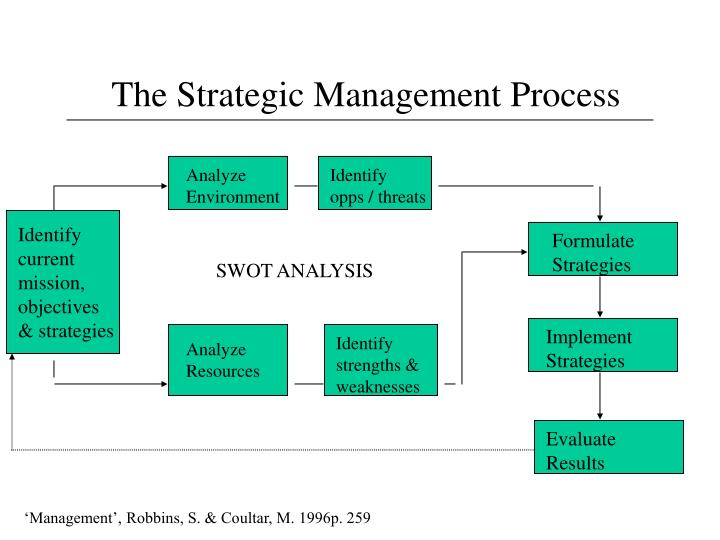
The Strategic Management Process

Making consistent decisions for a firm in all aspects of its operations is difficult without a well defined and clearly integrated strategy. The diagram below summaries a cycle which is sometimes helpful in developing this.

Strategic Management Diagram

Analysis

The first stage in developing a strategy is analysis. A management team should consider both its internal and external environment.

External Analysis: A firm should look at the opportunities and threats in its external environment. This should include a sound analysis of customer needs such as physical attributes, quality, delivery and costs and also the actions of its competitors.

Internal Analysis: A management team should also consider a firm’s own competencies and resources. This may include looking at where the firm is currently positioned, its strengths in terms of quality and delivery and its financial resources.

Synthesis

This relates to pulling together all the data from the analysis phase and determining a strategy. It can be broken up into distinct functional areas, but in reality there is considerable overlap among them and much iteration occurs.

Creating Marketing Strategy: Having completed external and internal analysis, a management team should be able to develop a marketing strategy. An important step in this involves the decision whether to compete in one narrow segment or broadly in several segments. Then the selection of a specific segment or segments allows customer needs to be defined. Once these are defined a firm can begin to implement marketing decisions in areas such as distribution channel selection, price, advertising and production volumes.

Creating Manufacturing Strategy: A manufacturing strategy should be defined in conjunction with marketing strategy. Strategic decisions may include whether to produce a low cost product, or to try and differentiate it with features and to charge a premium for this.

It also includes making decisions to provide sufficient capacity to produce at the required volumes. It also requires producing goods with the appropriate quality level, delivery speed and cost to meet the needs of target segments.

Creating Financing Strategy: After both the marketing and manufacturing strategies have been defined, the financing strategy can be developed to provide the necessary finance to support investments required by the marketing and manufacturing strategies. The debt/ equity ratio can also be adjusted to balance the risk in the rest of the firm’s operations.

Iterating Strategies

While the process outlined above follows clear sequential steps it is obvious that in reality these are interrelated. Thus it is important reconsider each of the strategies to ensure that the marketing strategy does not make demands beyond the capabilities of manufacturing and that neither the manufacturing or marketing strategies require investments beyond the firm’s ability to finance them.

Implementation

Planning is necessary, but some would say that 10% of the effort is in the planning and 90% is in the implementation. In MikesBikes-Advanced, it is assumed that the outcome of your firm’s decisions depends on the amount of money you commit and on the decisions of the competitor. In reality many more things come into play, such as the quality of the feedback and control systems, the nature of leadership, and the motivation of the people in the organization.

Feedback and Control

In MikesBikes-Advanced, you have feedback at the end of each year of operation. This is the information that allows you to learn and to improve performance in the next year.

Leadership

Leadership can make a huge difference to the performance of an organization. What sort of leadership, by whom, and when, is much more difficult to specify. This is not modeled in MikesBikes-Advanced.

Motivation

Motivation comes from rewards. These rewards can be financial (such as salary, bonuses, cars, etc), or non-financial (such as the satisfaction that comes from the work and being part of a team, the development of a person’s personal skills, etc). A good environment balances these two types for each individual to get the most rewarding environment.

Michael Porter’s Ideas on Strategy

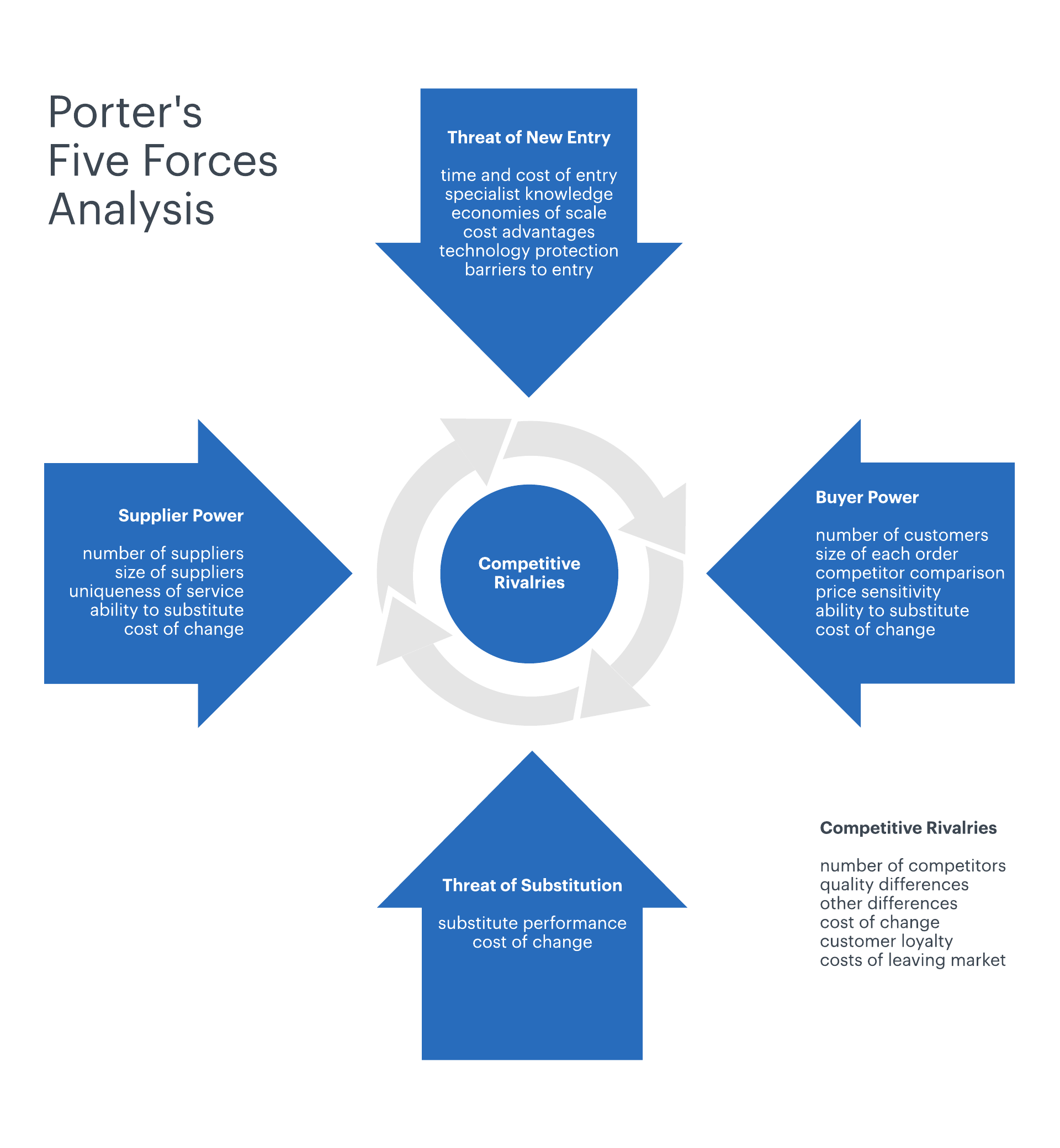
In the 1980’s Michael Porter developed some models for strategic analysis that focused on the five forces presented below. The best industry to be in is one which is most favorable in these areas.

Porter's Five Forces

Out of this analysis, he suggests that it makes sense for a Strategic Business Unit to choose one of three “generic” strategies – cost, differentiated, or focus.

The Cost Strategy suggest that one develop the least cost product for a segment. Often this is associated with selling high volumes at lowest price.

The Differentiated Strategy suggests that one develop a unique product and charge a higher margin for it.

The Focus Strategy suggest that one focus on the special needs of a niche segment.

MikesBikes-Advanced is ideally suited to experimenting with these different strategies.

Balanced Scorecard

The term “Balanced Scorecard” was coined by Kaplan and Norton to refer to a framework of financial and non-financial measures which attempts to give a more full and balanced picture of the performance of a firm.

The Balanced Scorecard is composed of four sections:

1. Financial Perspective – e.g. profit, share price.

2. Customer Perspective – e.g. sales, market share, warranty rate

3. Internal Performance Perspective – e.g. efficiency, leadtime

4. Innovation and Learning Perspective – e.g. new products

The idea is that a firm’s progress in implementing a strategy can be represented by improvements on a variety of key measures. These measures must be carefully chosen to be in line with the firm’s strategy and its plan for implementing the strategy.

The Balanced Scorecard approach can be applied in a tiered fashion to construct a performance measurement system for all levels of a company. Many firms use it in their reward/bonus system for their employees.

Measuring Success

Your objective is to create wealth for shareholders and so you will be evaluated on the cumulative change in Shareholder Value that your firm generates.

To see the shareholder value of your firm choose the “Financial Results for All Firms” report from the Key Reports menu.

Being evaluated on shareholder wealth is significantly different from evaluation based on net profit, market share, or earnings per share.

You can read more about this here.

Related Articles

How to Increase Shareholder Value in MikesBikes

Common Mistakes made by Students in MikesBikes

Top 3 Questions Students Ask

MikesBikes Intro (Foundations of Business Simulation) Tutorial Videos

MikesBikes Advanced (Strategic Management Simulation) Tutorial Videos

Smartsims Logo

COVID-19: Update from Smartsims Business Simulations

I wanted to take this opportunity to let you know that everyone in the Smartsims team is healthy and safe. We have been and will continue to follow all recommended government and professional guidelines to keep things that way. Our simulations, servers and networks remain unaffected.

The impact of COVD-19 will require many of you currently running a simulation to make changes to your schedules. Just let us know so we can postpone or re-schedule any upcoming events for your course.

I understand most university and college faculty around the world are now facing the challenge of transitioning their business courses to online delivery. As we already have a large number of online and hybrid courses, we are well placed to support you in any way we can. There are a range of options available to make this transition as easy as possible. Contact our team to discuss this further.

Wishing you and your loved ones all the best.

Thank you for your continued support!

Kind regards,

Ian McPherson
Vice President & Chief Operating Officer

Mila Lee from UoA

2019 MikesBikes World Champs Winner: Mila Lee from University of Auckland

Mila Lee also known as Da Li (pictured on the right) competed against the best teams from around the globe and have achieved a Shareholder Value of $136.18.

To wrap up the 2019 MikesBikes World Champs, we have interviewed Mila and ask her about their experience in the competition and what she thought about the simulation.

1. What is your decision making process within the simulation?

After each rollover, I would start by studying the reports and learn about the new market environment, evaluate the opponents’ moves and identify the strengths and weaknesses internally. Based on the above information and my overall strategy, I would make decisions for the next rollover.

2. What was your strategy going into the simulation?

I guess my strategy would be keeping the ultimate goal—boosting SHV in mind. Try to think one step ahead and always keep a close eye on the market. Analyzing corporate positions constantly and prioritize spending. I would make a full product development schedule from the start and use financial decisions wisely.

3. What challenges did you face? How did you overcome these? 

The biggest challenge for me is even if I had the idea of minimizing cost and waste in mind when I make each decision, the results were usually different from what I anticipated, a majority of the time. I would just learn from the results, doing more analysis and try to be more precise in the next round.

4. Was there anything, in particular, you did that you think helped to prepare yourself? 

My prep job started by digging into the Manuel and learn the basic logic, practice as much as I can using the single-player version. As I get more familiar with the simulation, I begin to put the theories I learned throughout my course into real use.

5. What do you think of the business simulation? 

It’s my first time using a business simulation and I think it’s more fun to learn this way. I get to coordinate and make decisions concerning each functional area of the company, which makes me feel more participated and in control.

6. Comments on your experience in your course simulation and with the MikesBikes World Champs

It was an enjoyable and educational experience, I get to work within a team during my course simulation, besides developing business management skills, it also provides a place for leadership to emerge. The World Champs is another chance to compete with the best teams throughout the world, it was a wonderful game and I enjoyed each and every rollover. 

7. Advice to future students

Don’t be too frustrated or afraid to lose, focus on absorbing from the experiences and most of all, enjoy the simulation!

Related Articles

MikesBikes World Champs Smartsims

The 2019 MikesBikes World Champs | Final Results

163 students from around the globe, 97 firms and two weeks of intense competition – we now have the Winner of the 2019 MikesBikes World Champs.

The 2019 MikesBikes World Champs Winner is Mila Lee from University of Auckland!

We are proud to announce that Mila Lee of PedalPals from University of Auckland is the 2019 MikesBikes World Champs Winner! Congratulations Mila for this outstanding achievement!

After the first rollover, Mila came in at third place. However, she has successfully managed to retain the top position throughout the remaining rollovers. Your determination and dedication to succeed certainly showed. We are sure that a lot of students will be inspired by your success.

In Second Place, we have Jin Fong and Luther Gray from Manukau Institute of Technology!

Congratulations Jin Fong and Luther Gray from Manukau Institute of Technology for coming in at second place!

We have seen your journey throughout the competition. There were certainly a lot of ups and downs. However, because of your drive to succeed and your impressive abilities, you were able to achieve success in this year’s competition.

Full Scoreboard

PosFirmSHVTeam MembersInstitution
1PedalPals$136.18 Mila LeeUniversity of Auckland
2Montague Bikes$118.21 Jin Fong | Luther GrayManukau Institute of Technology
3One T Cycles$95.03 Mat MillardTAFE SA
4Rice Inc.$61.36 Taylor RiceArizona State University
5Tindug$50.46 Dung NguyenSelkirk College
6Super Velos$44.55 Shawn ReccaUniversity of Oregon
7RDU Bikes$35.58 George Van Campen | Kaitlyn StolRed Deer College
8H and A Co.$34.86 Aaron Hirahara | Dylan AllenSanta Clara University
9Mikecycles$2.23 Daniel OldakDuquesne University
10Nicks Bees$0.01 Nicolas VallejoBroward College

Thank you to everyone who joined!

To the Top 10 Finalists, to all our Qualifying Round competitors and to the instructors – it was such a pleasure to have you all in this year’s MikesBikes World Champs! It wouldn’t be a success if it wasn’t for you all. We are certain that you have inspired all current and future students using MikesBikes to strive for success. We wish you all the best!

MikesBikes World Champs Smartsims

Meet the Finalists for the 2019 MikesBikes World Champs

We now have the list of participants for the Final Rounds of the 2019 MikesBikes World Champs!

These teams and solo competitors will be competing from the 12th until the 19th of December. As in the Qualifying round, Final ranks will be based on Shareholder Value. The winners will also be featured on the Smartsims’ website to recognize an exceptionally world class performance.

Keep an eye on their progress here and show them your support on our Facebook page. You can also use #2019SmartsimsMWC on both Facebook and Instagram.

Wishing everyone all the best! Hope you enjoy and find this to be a valuable experience!

StudentInstitution
Shawn ReccaUniversity of Oregon
Daniel OldakDuquesne University
Aaron Hirahara | Dylan AllenSanta Clara University
George Van Campen | Kaitlyn StolRed Deer College
Jin Fong | Luther GrayManukau Institute of Technology
Nicolas VallejoBroward College
Dung NguyenSelkirk College
Mila LeeUniversity of Auckland
Taylor RiceArizona State University
Mat MillardTAFE SA
MikesBikes World Champs

Meet the 2019 MikesBikes World Champs Qualifying Round Competitors

We now have the final list of Qualifying Round competitors for the 2019 MikesBikes World Champs!

These teams and solo competitors will be competing from the 8th until the 11th of December in the Qualifying Rounds to land a spot in the Top 10 for the Final Rounds!

Keep an eye on their progress here and show them your support on our Facebook page. You can also use #2019SmartsimsMWC on both Facebook and Instagram.

Wishing everyone all the best! Hope you enjoy and find this to be a valuable experience!

NameInstructorInstitution
Anass FathaniSamir AguenaouAl Akhawayn University
Hakim Ibrahim BakriSamir AguenaouAl Akhawayn University
Idir MoukhlisSamir AguenaouAl Akhawayn University
Maria BaijouSamir AguenaouAl Akhawayn University
Oussama Er-radySamir AguenaouAl Akhawayn University
Safaa SmidiSamir AguenaouAl Akhawayn University
Salma El HaddajiSamir AguenaouAl Akhawayn University
Xiaoyuxuan XuScott LivengoodArizona State University
Taylor RiceScott LivengoodArizona State University
Lachlan PollockKanchan BandyopadhyayAustralian Catholic University
Bohdana ClancyKanchan BandyopadhyayAustralian Catholic University
Brett DobbieKanchan BandyopadhyayAustralian Catholic University
Kurt MagnerKanchan BandyopadhyayAustralian Catholic University
Dan HeathDuke RogersBethany College 
Elijah MartinezDuke RogersBethany College 
Wyatt GuthrieDuke RogersBethany College 
Ben LagueGreg StollerBoston University
Jessica WahbaGreg StollerBoston University
William KingsleyGreg StollerBoston University
Nicolas VallejoOmar ValeroBroward College
David Son LamRhonda RhodesCal Poly Pomona
Brittany WeatherlyChristina JamesCentral Carolina Technical College
Valerie BrownDiane FulcherCentral Carolina Technical College
Ian DorsBob HasbrouckChristopher Newport University
Daniel HulettBob HasbrouckChristopher Newport University
William StockhausenBob HasbrouckChristopher Newport University
Dylan RiceBob HasbrouckChristopher Newport University
William DavisBob HasbrouckChristopher Newport University
Cheyenne AbbettLori TuckerConcordia University
Tommy NguyenLori TuckerConcordia University
Garrett MaakestadJen SchulteDes Moines Area Community College
Tian LinguoJosh DainesDes Moines Area Community College
Bao Chau VuMitch LindquistDes Moines Area Community College
Rachel ChinyamaMitch LindquistDes Moines Area Community College
Corry BurtonReggie SinhaDes Moines Area Community College
Nate WernerReggie SinhaDes Moines Area Community College
Kiry MomphoIan Wagner Drexel University
Nithish RajaIan Wagner Drexel University
Preston MahoneyIan Wagner Drexel University
Daniel OldakLeslie MansfieldDuquesne University
Alex AngleBob HirthHigh Point University
Jamie WestBob HirthHigh Point University
Mason BaileyPaul ForsheyHigh Point University
Kathy ChenHouse of Cornelia
Sam ChowdhuryHouse of Cornelia
Wagner LessaShelley MitchellHult International Business School
Tristan ReadAlison Shields, James Morton, John Vongas, Sean Reid, Warren SchlesingerIthaca College
Austin RuffinoAlison Shields, James Morton, John Vongas, Sean Reid, Warren SchlesingerIthaca College
Charlie EberleAlison Shields, James Morton, John Vongas, Sean Reid, Warren SchlesingerIthaca College
Colin NortonAlison Shields, James Morton, John Vongas, Sean Reid, Warren SchlesingerIthaca College
Elaina WeirAlison Shields, James Morton, John Vongas, Sean Reid, Warren SchlesingerIthaca College
Brandon BrownBrian CareyJohnson & Wales University
Divine OnyemeBrian CareyJohnson & Wales University
Sarah GrumboMindy BeanLinn Benton Community College
Christy RuseMindy BeanLinn Benton Community College
Ian AndrewsMindy BeanLinn Benton Community College
Cassandra BaitleyBruce WrightLoyalist College
Danielle FoshayBruce WrightLoyalist College
Christal Palmer Bruce WrightLoyalist College
Nathan HellerDan BielinskiMadison College
Derrick SchmidtDan BielinskiMadison College
Moeen WaniTui Taulapapa Manukau Institute of Technology
Jin FongTui Taulapapa Manukau Institute of Technology
Luther GrayTui Taulapapa Manukau Institute of Technology
Katherine HerreraShanthi GopalakrishnanNew Jersey Institute of Technology
Stephanie TurciosShanthi GopalakrishnanNew Jersey Institute of Technology
Vaidehi DaveShanthi GopalakrishnanNew Jersey Institute of Technology
Jessica RichardsonDavid KitlanPennsylvania State University
Montana GleasonDavid KitlanPennsylvania State University
Paul WarmanDavid KitlanPennsylvania State University
Stephen HengeliDavid KitlanPennsylvania State University
Kaitlyn StolDustin QuirkRed Deer College
George Van CampenDustin QuirkRed Deer College
Maria Luisa FroilanEbenezer SackeyRed Deer College
Chris FerrariJohn WardRochester Institute of Technology
Dell DanusaputroJohn WardRochester Institute of Technology
Michael DeRobertisJohn WardRochester Institute of Technology
Philip RottkampJohn WardRochester Institute of Technology
Melody LinMike HolubarSanta Clara University
Johnathan BorstShawn LangeSanta Clara University
Jason FongTanya BungerSanta Clara University
Amelia Catherine LeeTanya BungerSanta Clara University
Brian Minh NguyenTanya BungerSanta Clara University
Darius Ramon JohnsonTanya BungerSanta Clara University
David IadanzaTanya BungerSanta Clara University
Jack William HickeyTanya BungerSanta Clara University
Aaron HiraharaBob FinocchioSanta Clara University
Augustine JunTim HarrisSanta Clara University
Dylan AllenTim HarrisSanta Clara University
Alex MordiniMike HolubarSanta Clara University
Ryan TurnerAbha SinghviSanta Clara University
John WalshAbha SinghviSanta Clara University
Sukhpreet SinghGreg Dodd, Mike KonkinSelkirk College
Pawanpreet SinghGreg Dodd, Mike KonkinSelkirk College
Naman VaidGreg Dodd, Mike KonkinSelkirk College
Huu Huy LamGreg Dodd, Mike KonkinSelkirk College
Jatin DhimanGreg Dodd, Mike KonkinSelkirk College
Manmeet Kaur AhujaGreg Dodd, Mike KonkinSelkirk College
Mohit ShahGreg Dodd, Mike KonkinSelkirk College
Nyari SharmaGreg Dodd, Mike KonkinSelkirk College
Manoj Kumar BhambriGreg Dodd, Mike KonkinSelkirk College
Avinash SinghGreg Dodd, Mike KonkinSelkirk College
Dung NguyenGreg Dodd, Mike KonkinSelkirk College
Sanchit JoshiGreg Dodd, Mike KonkinSelkirk College
Parker WakarukGreg Dodd, Mike KonkinSelkirk College
Andrew KoesterSenthil MuthusamySlippery Rock University
Mason DeHartSenthil MuthusamySlippery Rock University
Tace ZonaSenthil MuthusamySlippery Rock University
Duncan McMeikanJohn ArcherSouthern Institute of Technology
L.R.G.Nelum Wijekoon ArulalanJohn ArcherSouthern Institute of Technology
Marcelo Rodrigues Magioli SerenoJohn ArcherSouthern Institute of Technology
Ninushi Chathurika Suranji RathnayakaJohn ArcherSouthern Institute of Technology
Vijay SharmaJohn ArcherSouthern Institute of Technology
Daniel SammarcoMike SaleStonehill College
Danny ArriolaMike SaleStonehill College
Freddy ArriolaMike SaleStonehill College
Jack CookMike SaleStonehill College
Jada FroioMike SaleStonehill College
Anthony FrancisMike SaleStonehill College
Omoregie EnobakhareMike SaleStonehill College
Scott FraserMike SaleStonehill College
Tyler RachauskasMike SaleStonehill College
Ben SimmonsMike SaleStonehill College
Jeffrey BrothersRalph ArmentaSUNY Empire State College
Jesse oleetRalph ArmentaSUNY Empire State College
Miklos szaboRalph ArmentaSUNY Empire State College
Mohandass RamuGlenn Cumberland, Robert RychlikTAFE NSW
Mat MillardJocelyn AwwadTAFE SA – AIT
Dat NguyenJames AriailTarrant County College District
Helena LiuDarl Kolb, Audrea WarnerUniversity of Auckland
Mila LeeDarl Kolb, Audrea WarnerUniversity of Auckland
Ben EuhusDoug AlbertsonUniversity of Idaho
Brian FrankDoug AlbertsonUniversity of Idaho
Zuelah YagerDoug AlbertsonUniversity of Idaho
Adam MehrKevin CooperUniversity of North Dakota
Cole BeeversKevin CooperUniversity of North Dakota
Nate BassingerDave DusseauUniversity of Oregon
Jason ChenDave DusseauUniversity of Oregon
Cooper HinmanDoug WilsonUniversity of Oregon
Chris GastonDoug WilsonUniversity of Oregon
Maya LortonDoug WilsonUniversity of Oregon
Marcus LydonErik FordUniversity of Oregon
Jordan RichardsErik FordUniversity of Oregon
 Jessica van DeinseErik FordUniversity of Oregon
Ryan ChuTom DurantUniversity of Oregon
Bretten FarrellTom Durrant University of Oregon
Jadon ConverseTom Durrant University of Oregon
Riley FarrellTom Durrant University of Oregon
Shawn ReccaTom DurantUniversity of Oregon
Asha Miller-SowersDavid DusseauUniversity of Oregon
Issa El BraidiDrew EvansUniversity of Winnipeg
Nikita TsyganovGary BrownstoneUniversity of Winnipeg
Joshua ManiaccoMaryam Memar ZadehUniversity of Winnipeg
Kyle McCoyMaryam Memar ZadehUniversity of Winnipeg
Quynh Anh NguyenMaryam Memar ZadehUniversity of Winnipeg
William ThomasVirginia Commonwealth University
Apeksha Nidarshani PeirisNancy NankivellWaikato Institute of Technology
Dhruv VermaNancy NankivellWaikato Institute of Technology
Suryaprakash VasudevanNancy NankivellWaikato Institute of Technology
Deborah FreshwaterAndrew ColosimoWestmoreland Community College
Jessica MehalickAndrew ColosimoWestmoreland Community College
Robert StonerBob HasbrouckWestmoreland Community College
Mary PetersonShannon GazzeWestmoreland Community College
William ClarkShannon GazzeWestmoreland Community College